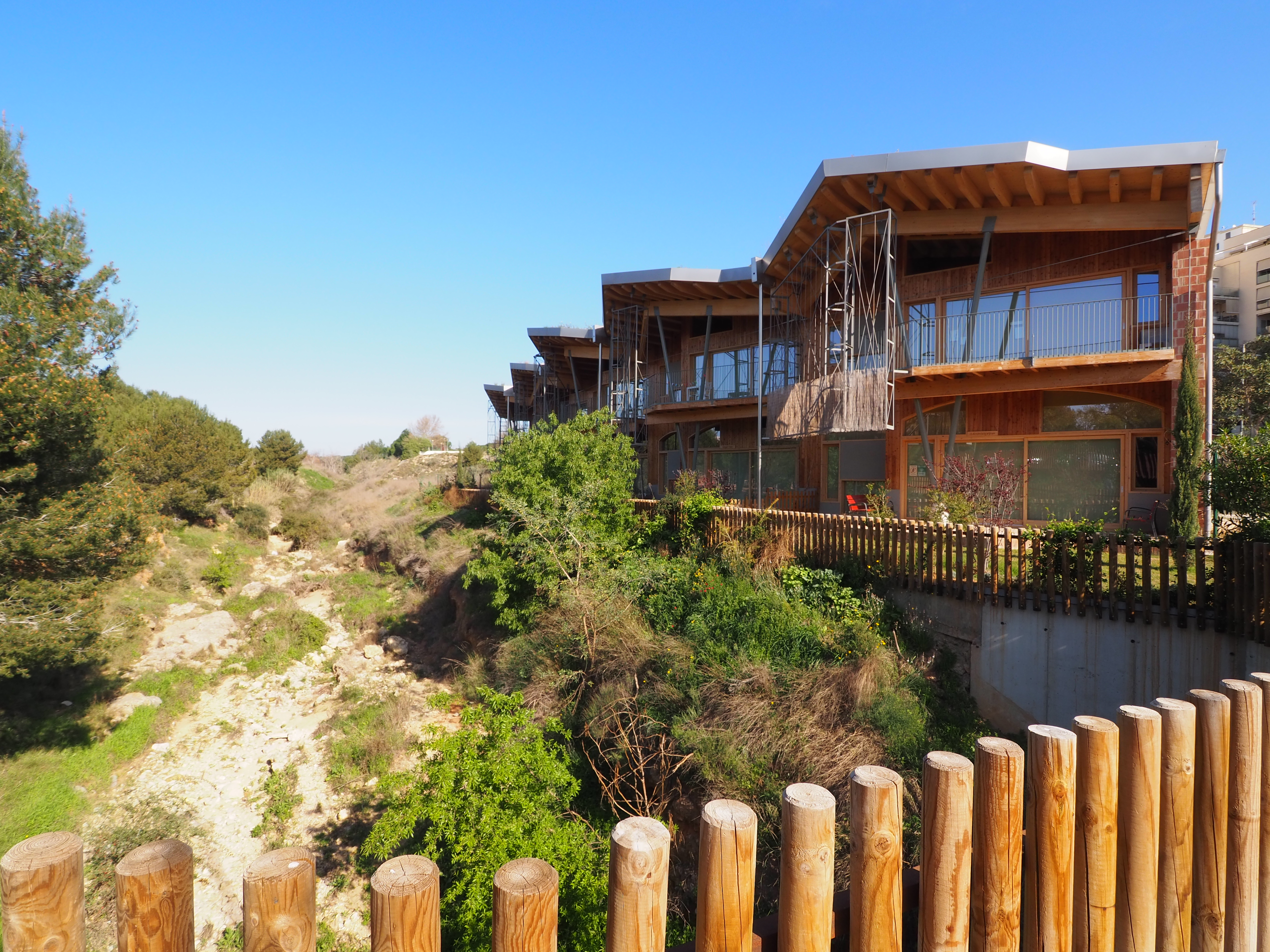
[Originally published in The Architectural Review May 2021]
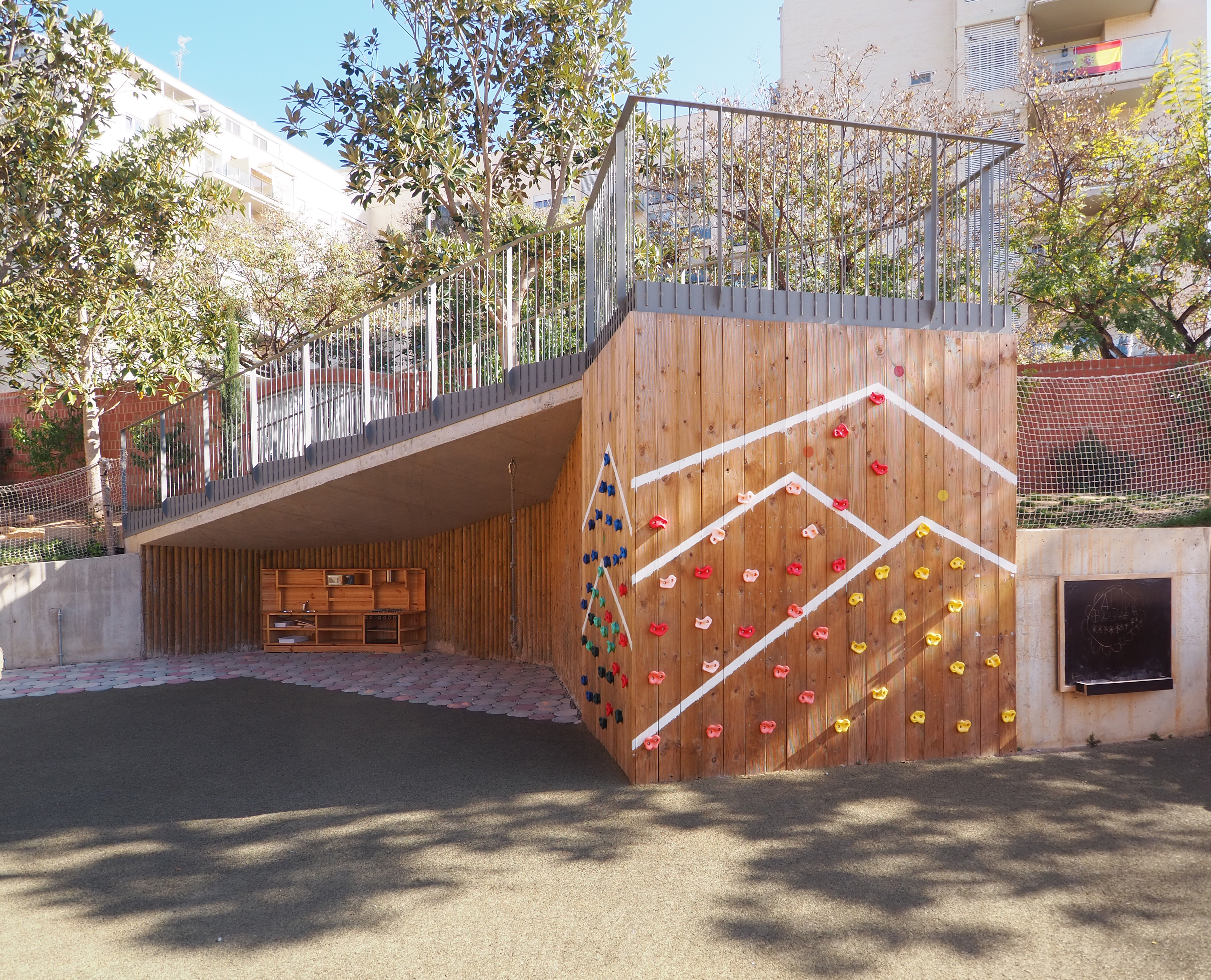
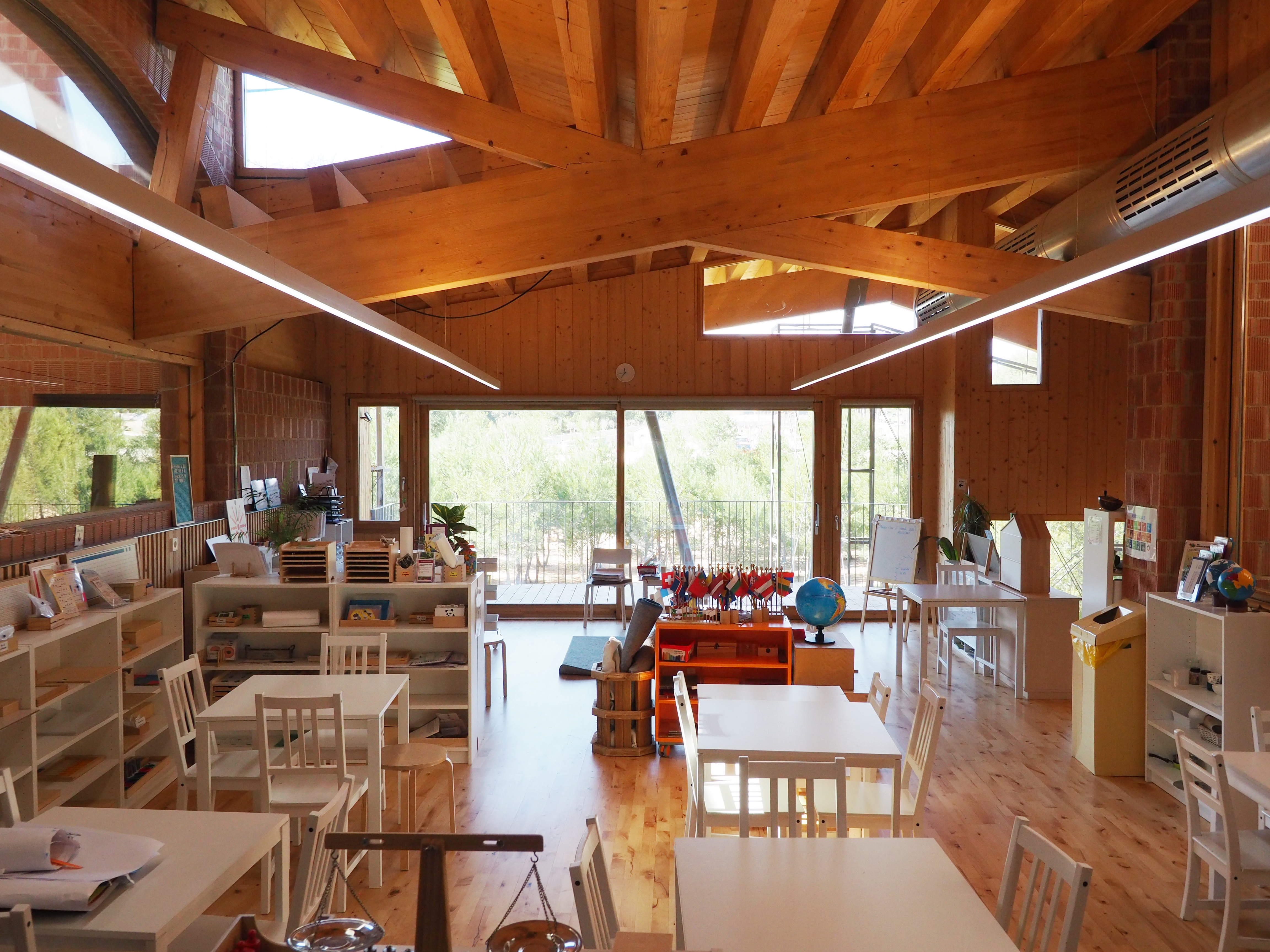
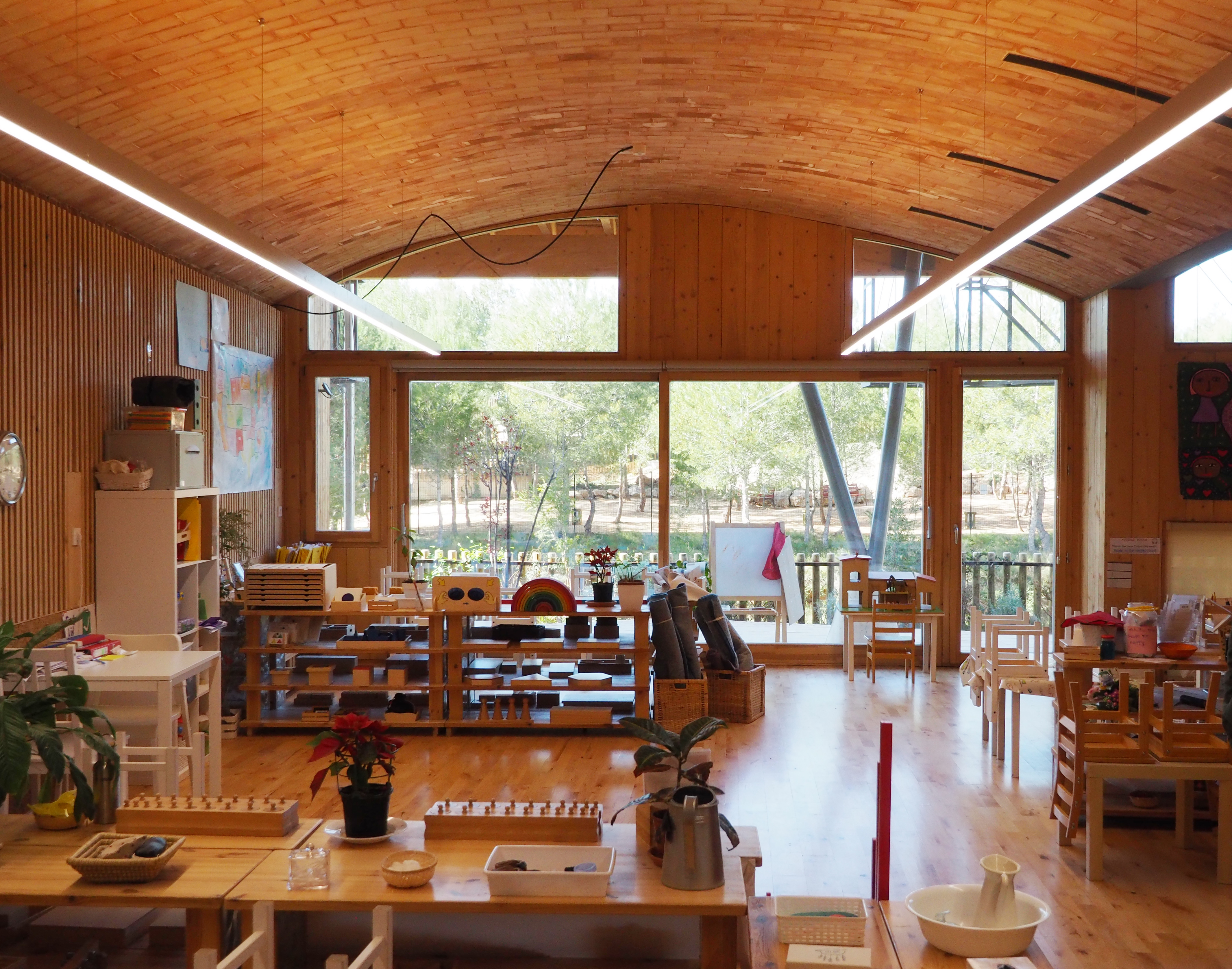
One of the first alterations that pupils of the Imagine Montessori Primary School wanted to make to their brand-new building was to convert a concrete pillar supporting an outdoor stairway into a climbing wall. They designed and built it themselves, attaching wood paneling with climbing grips to the pillar, while at the same time outfitting a low, leftover space beneath the stairs as a chill-out zone now nicknamed ‘the cave’. The story repeats indoors, where hidden spaces and out-of-the-way corners appear to be appropriated — domesticated with children’s furniture and educational toys.
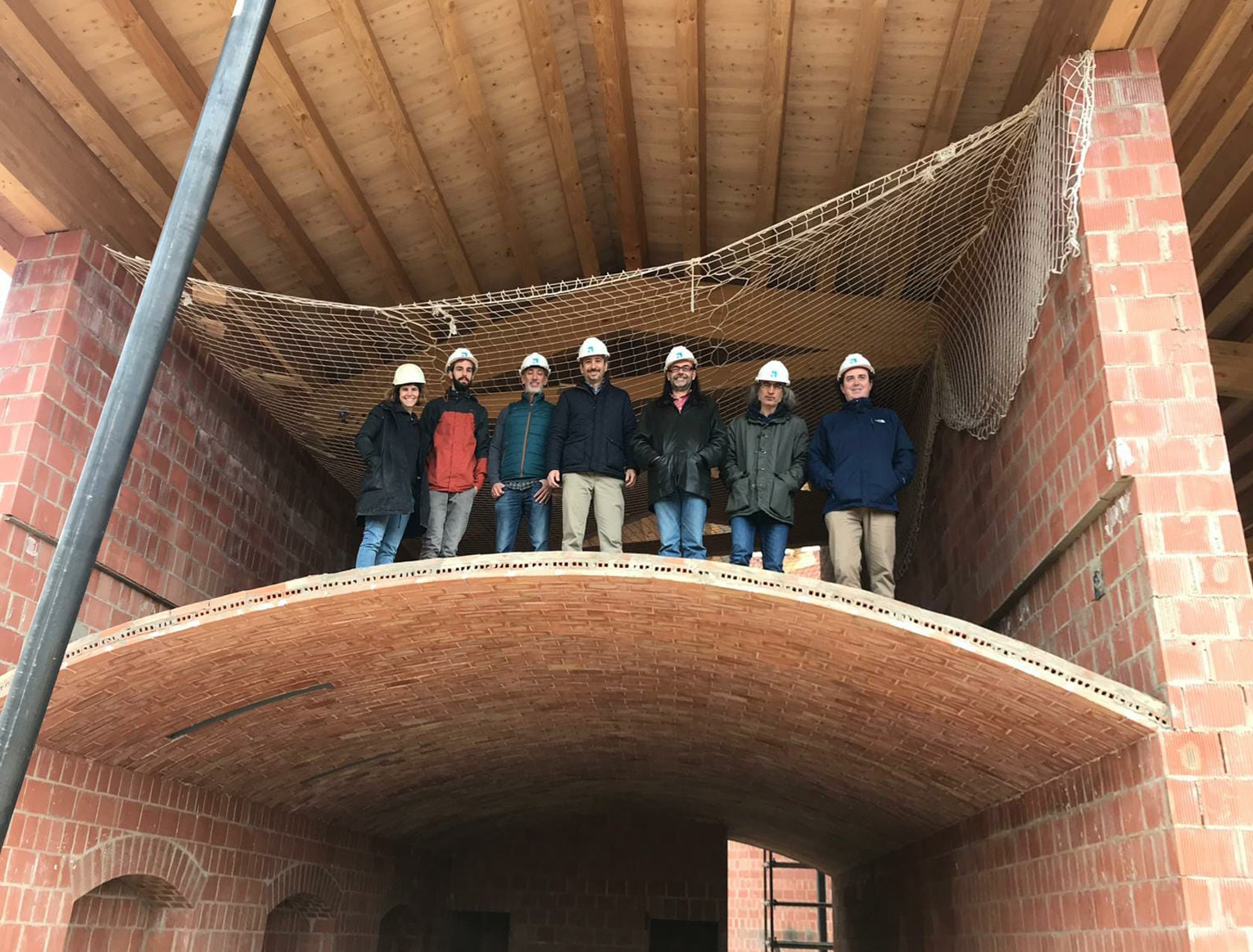
Leaving anything to chance, let alone to children, flies directly in the face of control freaks, but Gradolí & Sanz Arquitectes are not bothered in the least by what might appear, to some, as chaos. On the contrary, they see it as validation of their work, which is not without its own aspects of indeterminacy. Learning is a lifelong adventure that comes from ‘doing’ and from experiencing successes and failures — the very stuff of evolution and natural selection. We learn most effectively by trial and error: ‘if at first you don’t succeed, try, try again’, they say. Yet the more empirical ‘hands-on’ approach is largely viewed as a lesser form of learning compared with more abstract and scholarly theory — including in architectural education, where dirtying one’s hands mixing mortar and laying bricks was once considered normal. The result has been a growing gap between theory and practice, and a widening division of labour resulting in today’s ‘barbarism of specialisation’, as José Ortega y Gasset termed it, or what the late David Graeber more recently termed ‘bullshit jobs’: a highly bureaucratised society of nerds and Fachidioten (professional idiots) in which perfect predictability must always lead to predictable perfection.
[To continue reading, please visit The Architectural Review]
 Criticalista