Yesterday, in the middle of the day, the electricity went out on the entire Iberian peninsula. From one minute to the next, everything changed: no internet, no charging smart phones, no public transit, no credit card payments, no classes… Throughout Iberia, tens of thousands had to be rescued from elevators, subways, and trains that suddenly came to a halt. Commuters and tourists were suddenly left stranded, many having to spend the night in improvised shelters.
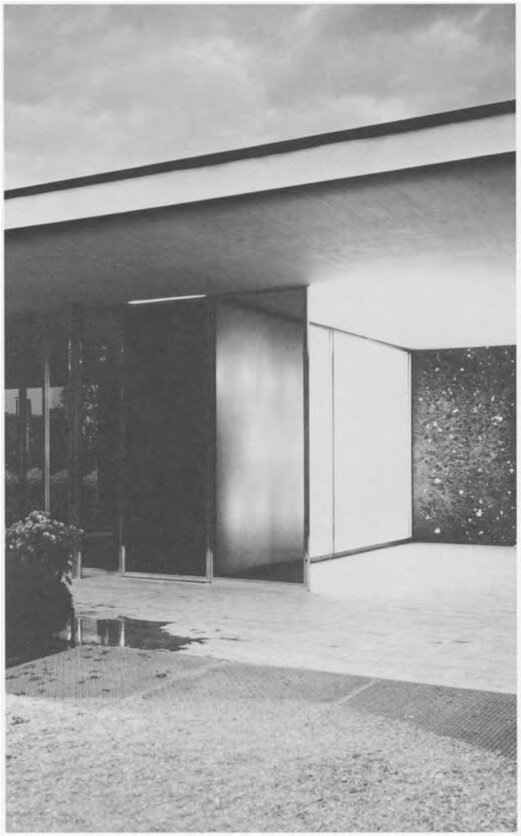
We have become utterly dependent on electricity. Only a hundred years ago, electricity was still being installed in many cities, including Barcelona, which only became fully electrified in 1929. A universal exposition was even organized to celebrate this achievement. Weimar Germany exhibited a pavilion designed by Mies van der Rohe and Lily Reich whose artificial lighting fixtures were entirely concealed behind a pair of mysterious translucent glass “lightwalls” that also transmit natural light during the day. Brilliant.
In fact, many parts of the world still live completely without electricity, or have had their electricity infrastructure destroyed, as is the case in Gaza, courtesy of the Israel “Defense” Forces. There are also many rural houses and cabins in the developed world that are offgrid, running on sun and wind. But these sorts of abodes are generally so remote and so car-dependent, that the energy savings simply end up being burned in an internal combustion engine instead. In any case, these are freaky exceptions: most of us are urban, wired, and probably couldn’t survive very long without electrical energy.
When the power went out, I was in my office, which has natural light, in the middle of grading term papers on the Moodle platform, and so even though my laptop had a few hours of battery power stored I had to stop, as I was working in a cloud. In fact, I could hardly do anything else work-wise, as most of my software programs require internet connectivity.
My small office is one of a dozen in a 2 story building organized around a central courtyard. When the power went, everyone stepped into the courtyard to see what was going on. A transistor radio was turned on, which is when we learned that this was a national outage, and that it was going to take the rest of the day to restore normality. What to do? We all pulled some chairs out of our offices and simply hung out and exchanged laughs; there was little else to do.
Later on my partner and I walked home for lunch. The elevator was not working, of course, but luckily our building is only 5 stories high. After lunch, which consisted of sandwiches, we went on a leisurely walk to see all the cars stuck in gridlock, commuters crowded at bus stops, and huge tourists with gigantic roller suitcases looking desperately for a taxi. At the same time, there was a festive atmosphere in my neighborhood: people were talking with neighbors and shop-owners, enjoying the time off. Incredible what happens when our smart phones don’t work: people start to talk to one another. In person.
It was admittedly a drag not to be able to work and earn money (I am self-employed), but in other regards I was very lucky. I live a five minute walk from my office and a 15 minute walk from the centre of town where I teach, and none of the buildings I live or work in are high-rises. What if I lived way out in suburbia or in a high-rise luxury condo tower, and had to commute to an office tower every day for work? I realized that my low-rise, inner-city, 15 minute way-of-life can’t be beat, even when the electricity is on.
The cause of this outage is under investigation. In 2003, a fallen tree caused a blackout in all of Italy. In January 1998, an ice storm in Canada caused a blackout lasting several weeks in the middle of winter, causing 34 deaths. What happened yesterday was nothing, but it shows how dependent we are on our electrical grid, and how much we take that grid for granted.
 Criticalista