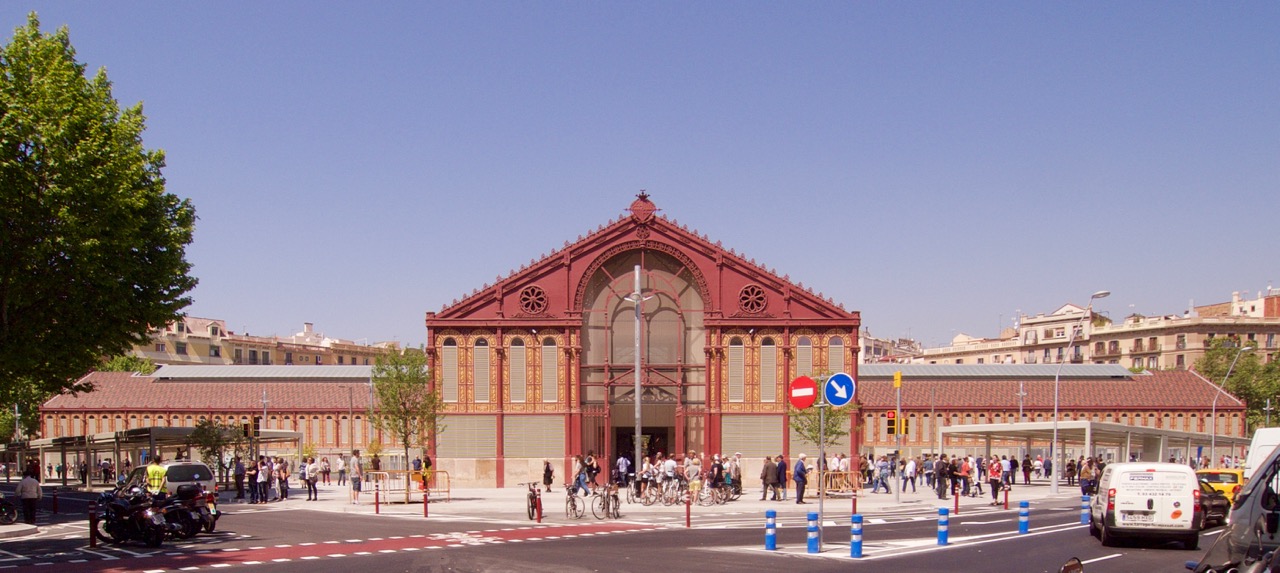
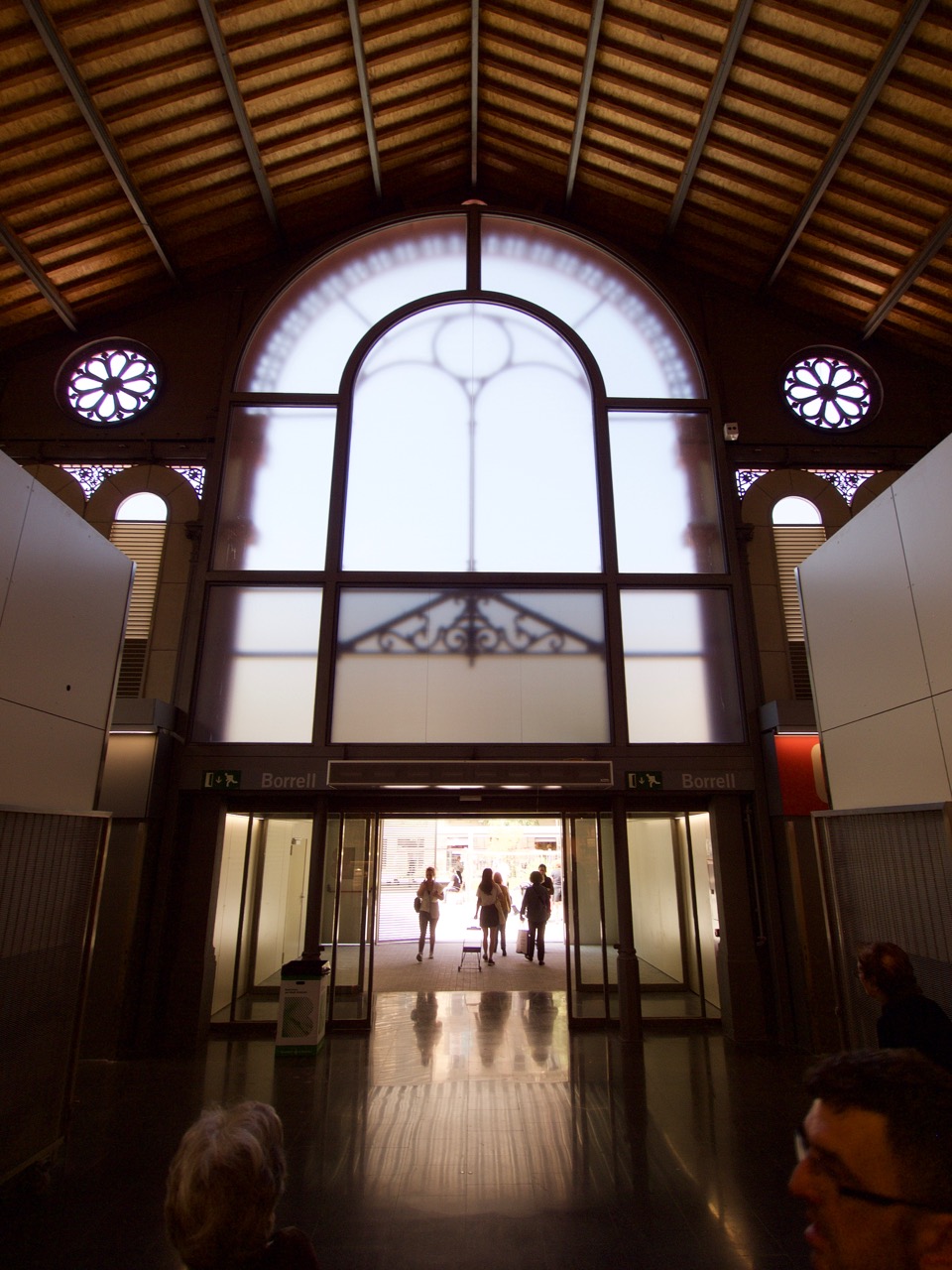
 Barcelona’s biggest market, Mercat Sant Antoni, has finally opened its doors after a renovation process lasting nearly a decade. The original market, by architect Antoni Rovira i Trias, was completed in 1882 within the then-new Eixample district, occupying an entire city block with a diagonal cruciform configuration that intelligently places entrances at every street-intersection. With its multiple access-points (there are also four mid-block lateral entrances) and its seamless integration with the urban infrastructure, Mercat Sant Antoni was effectively a megastructure nearly a century before these became an architectural thing. A “mini-megastructure”, perhaps, but prototypical nevertheless.

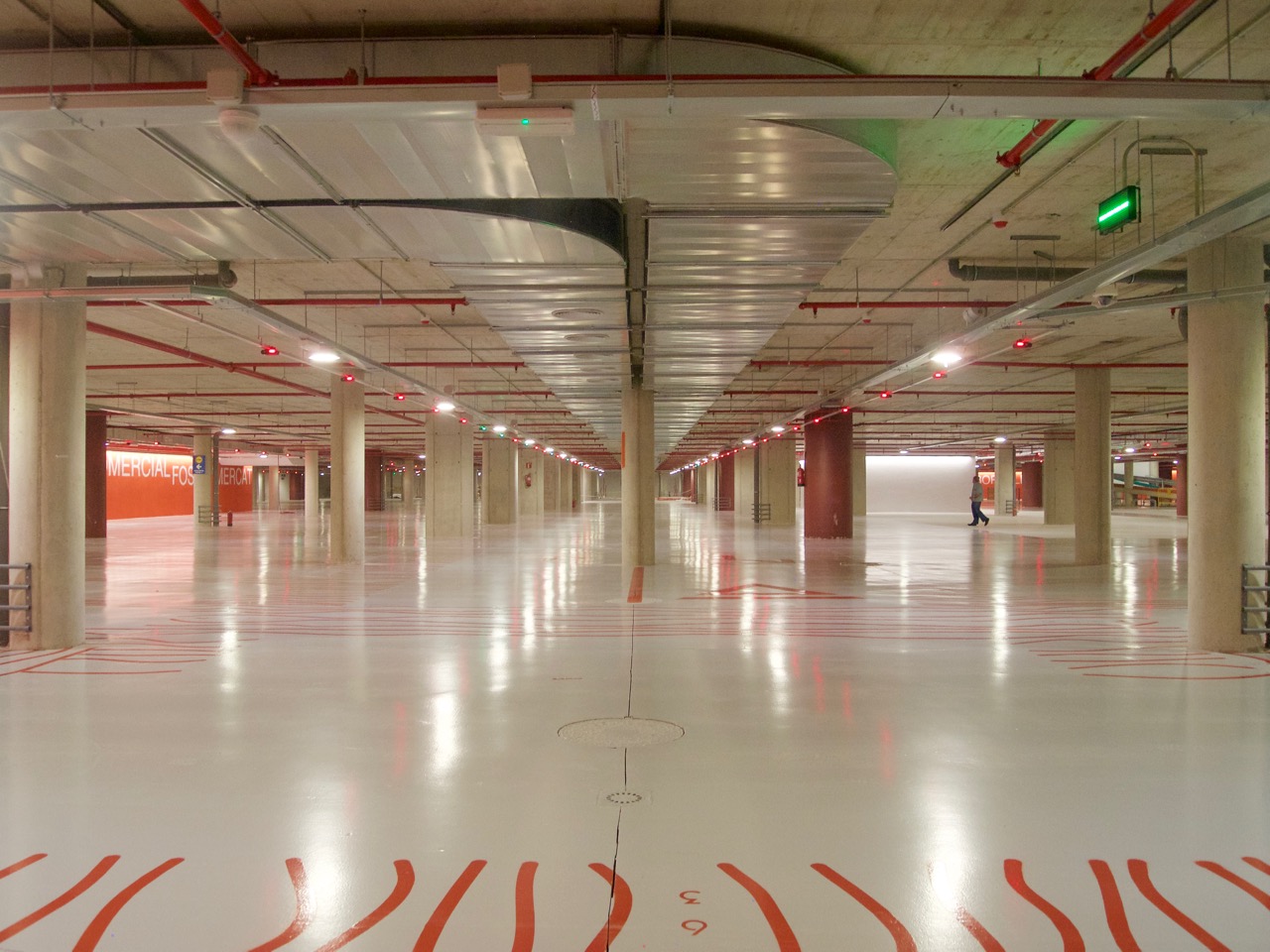
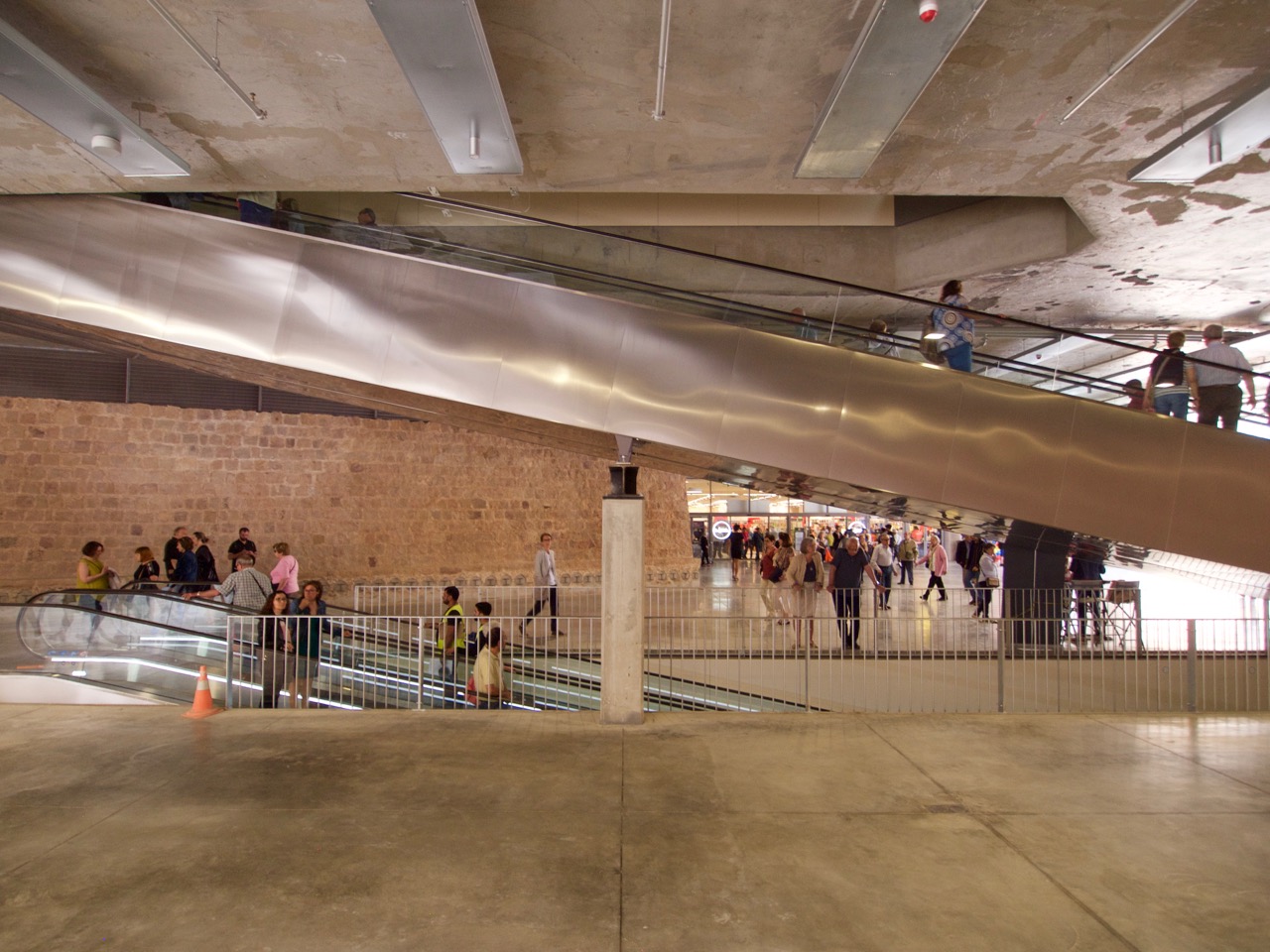
Now, with the addition of four new underground levels beneath –one level contains a supermarket as well as a neighbourhood multi-use space exhibiting archaeological ruins uncovered during the big dig, another underground level is a loading and unloading area for dozens of delivery trucks, and two levels contain underground parking– this is even more of a megastructure. To boot, the block that the market occupies now forms part of a “superilla“, or a superblock within which streets are now greenways and intersections public squares, the motor-traffic having been reduced and calmed beyond recognition. A superilla-mini-megastructure?

The renovation of Mercat Sant Antoni by Pere Joan Ravetllat and Carme Ribas has all the characteristics of the kinds of projects that earned Barcelona its fame in the Olympic era: the creation of inviting outdoor public spaces, the seamless integration of such public spaces with public infrastructure (the city’s markets were originally conceived as nodes of a food distribution system), and the sensitive restoration of architectural heritage, in this case a landmark modernista building. It’s certainly an occasion to be celebrated.






 Criticalista
Wow! Thanks for this update and great summary! Can’t wait to visit it! Yummieeee