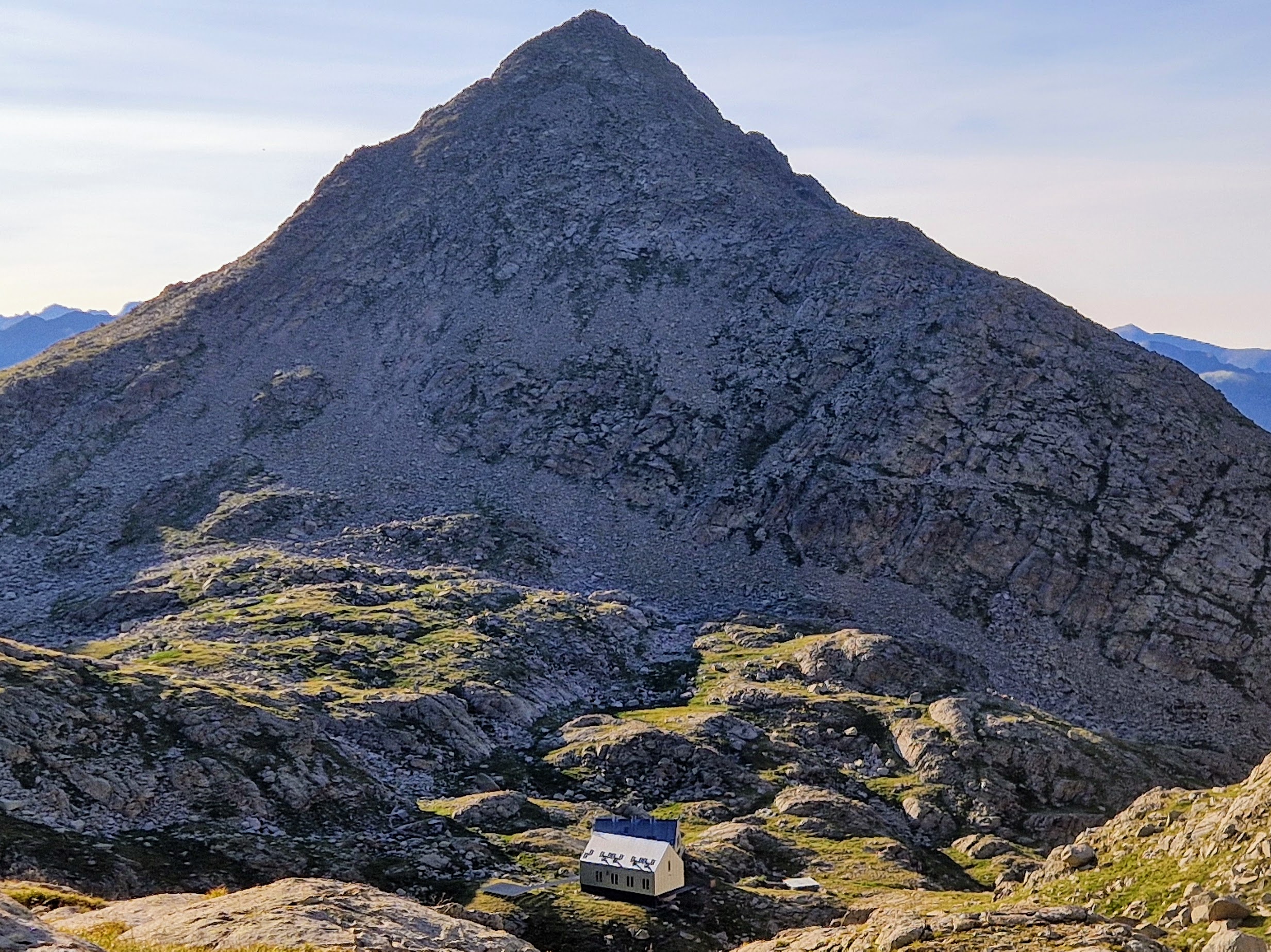
Mountain huts, when situated far from any infrastructure such as a road or a ski lift, cannot afford to be architecturally gratuitous. They must make the most intelligent use of space and materials, and they must perform as efficiently as possible. The Cap de Llauset mountain hut, designed by architects Alejandro Royo and Ramon Solana for the Aragonese Mountain Federation, is situated along the hiking trail GR 11 that traverses the entire Pyrenees mountain range. It is located at 2425m altitude near Mount Aneto, the Pyrenees’ highest peak at 3404m. Its comfort is basic: sleeping is in dormitory bunk beds; eating in a dining room with shared tables. While this may not meet with the common definition of “luxury,” believe me: after a gruelling hike over the 2812m Salenques pass, there is no greater luxury than being able to take a warm shower and being served a hot bowl of lentils at such a convenient location.
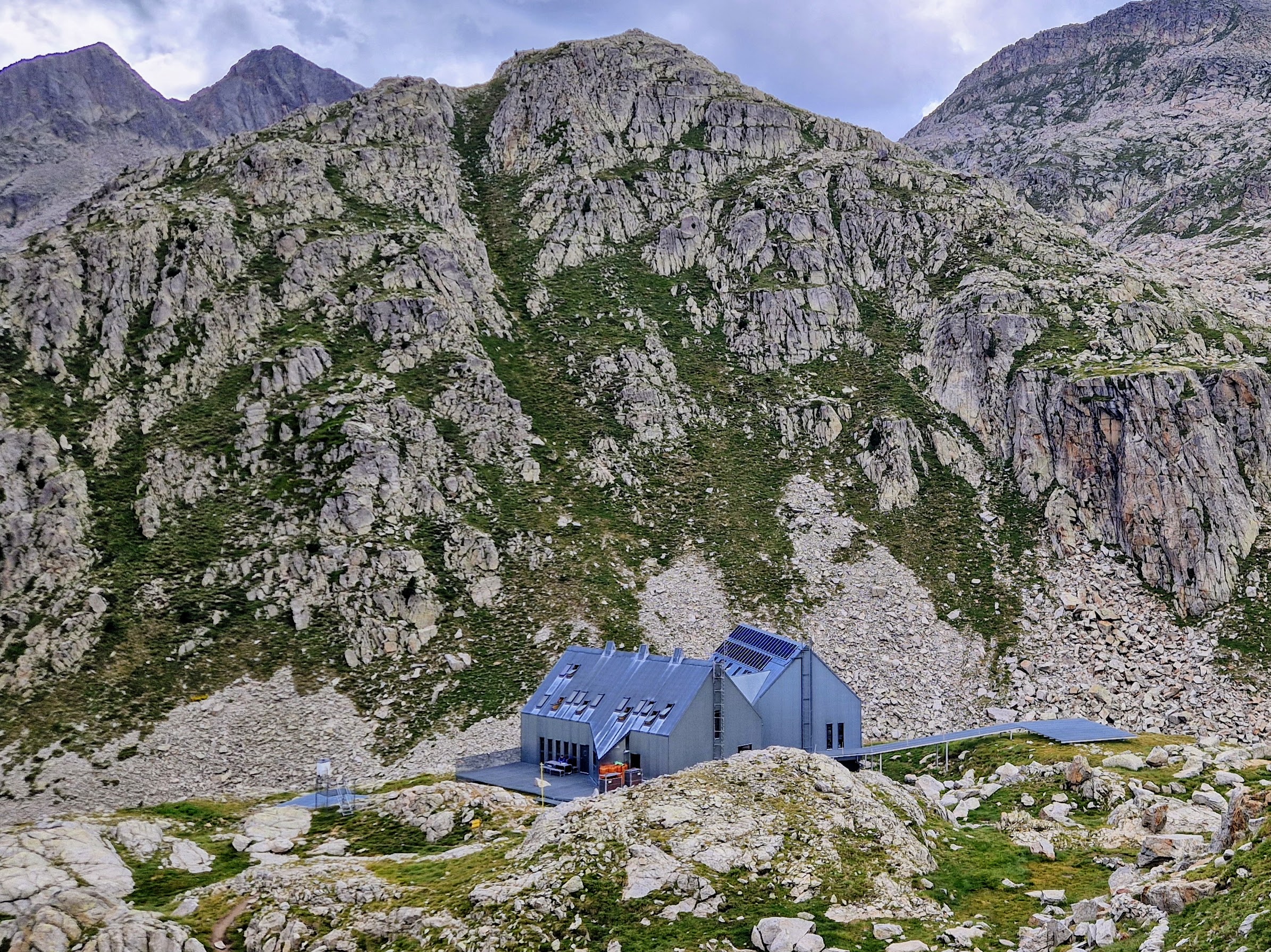
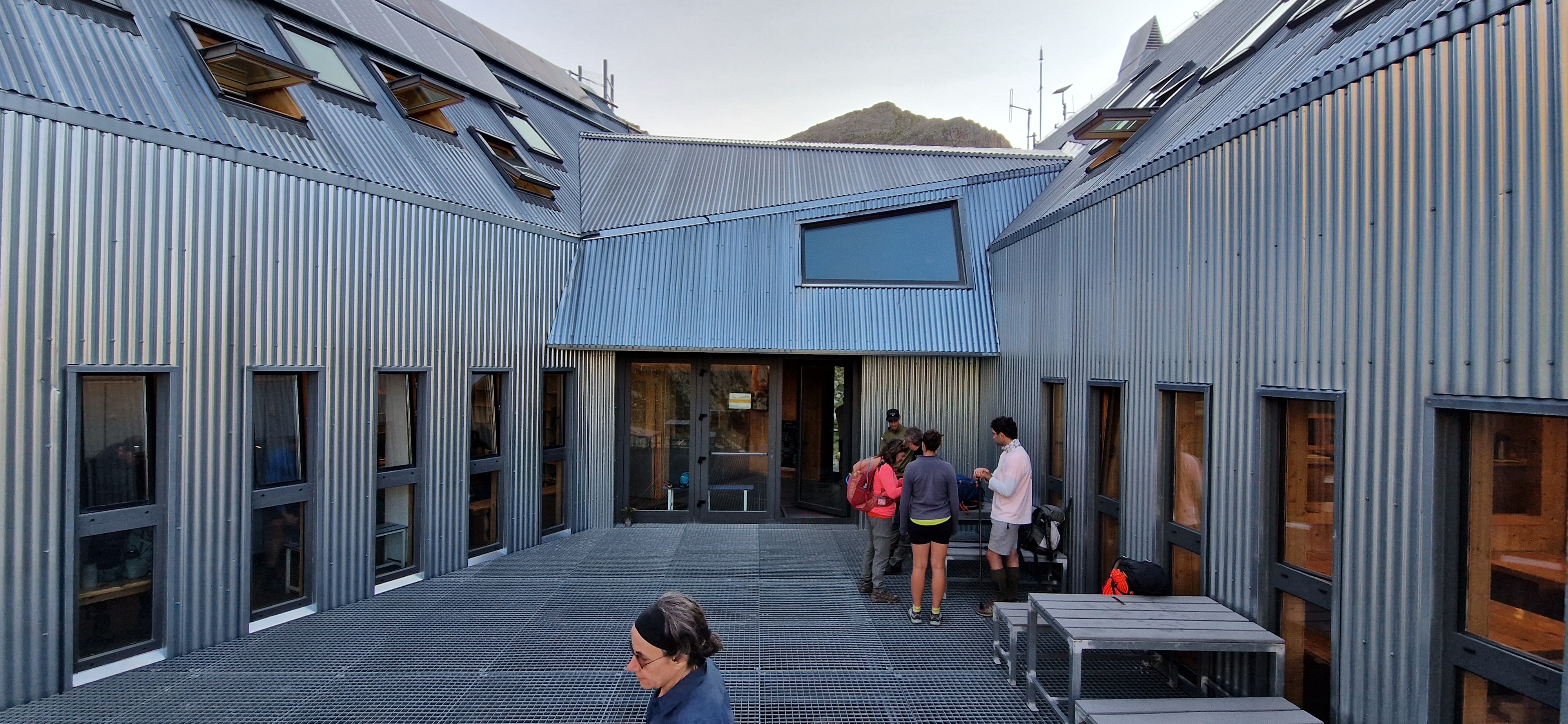
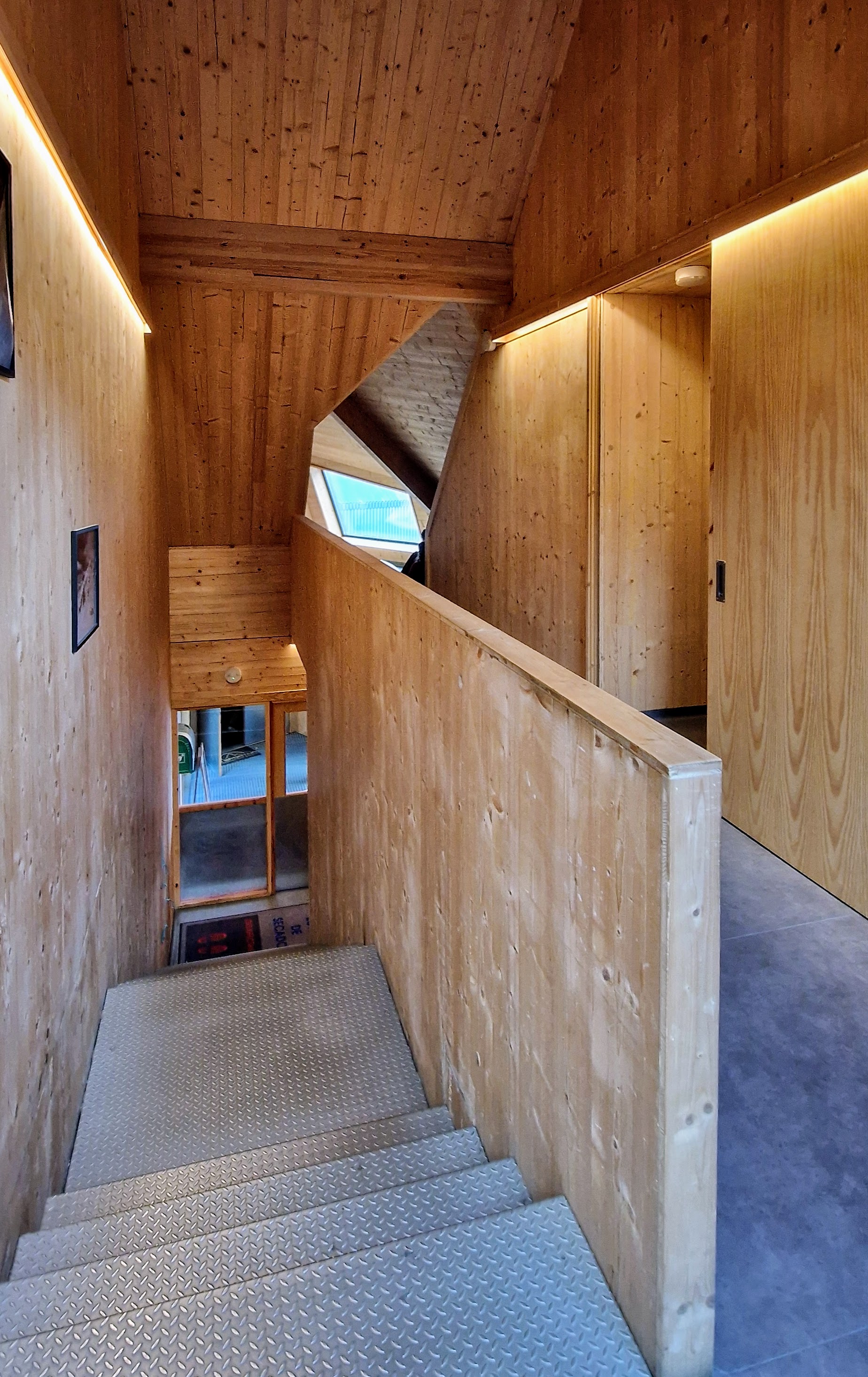
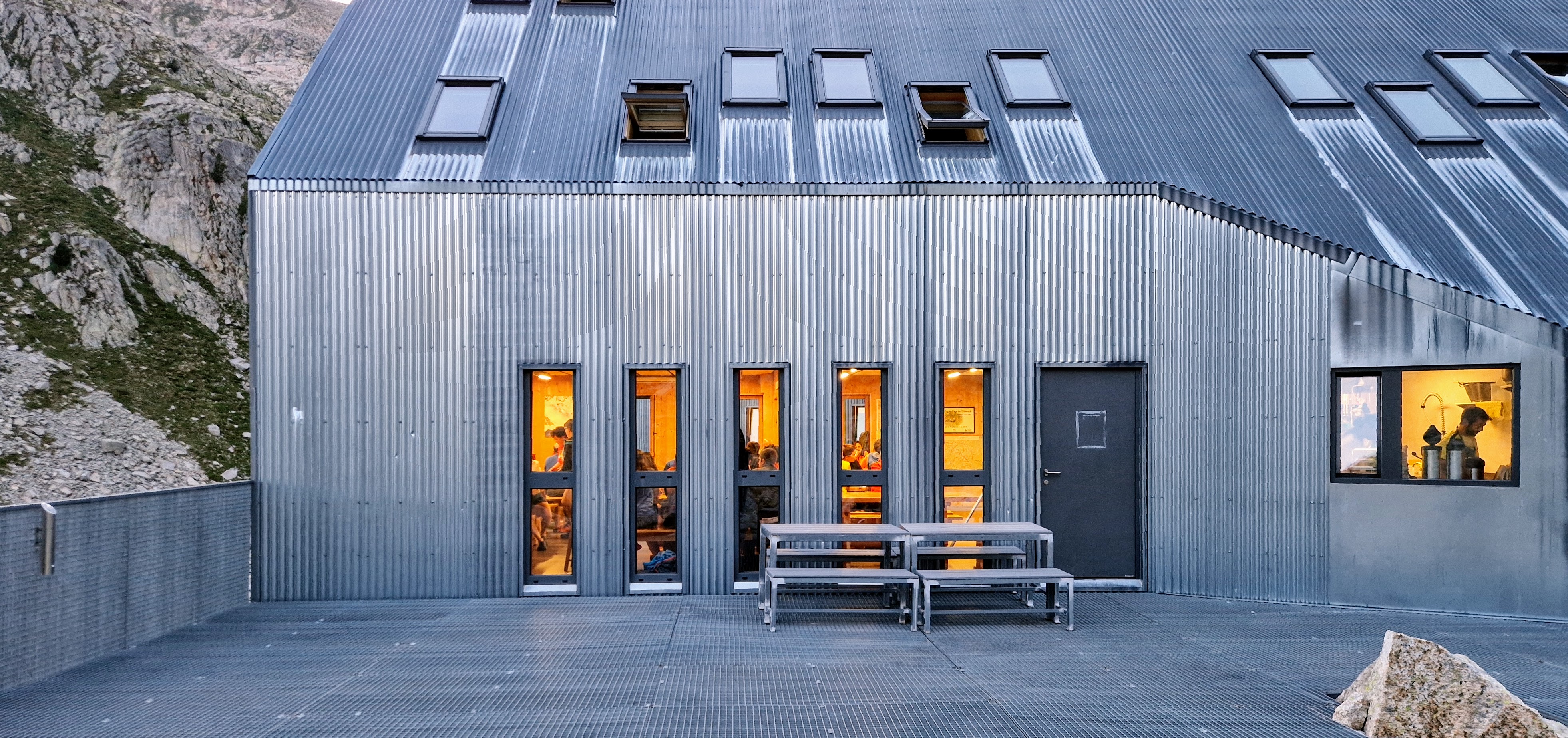
Completed in 2018, the mountain hut consists essentially of two gabled buildings that fan out from a lower connecting volume to create a protected outdoor space. The main floor of the facility contains the more public functions –entry foyer, locker room, check-in counter, kitchen, dining room– while the upper level consists mostly of six-person dormitories with their own bathrooms (a step up from older huts). Constructed of cross-laminated timber (CLT) and glulam left entirely exposed on the interior, the structure is clad on the exterior with galvanized corrugated sheet steel on both walls and roof, creating a tough aesthetic that is consistent with the tough climate and topography.
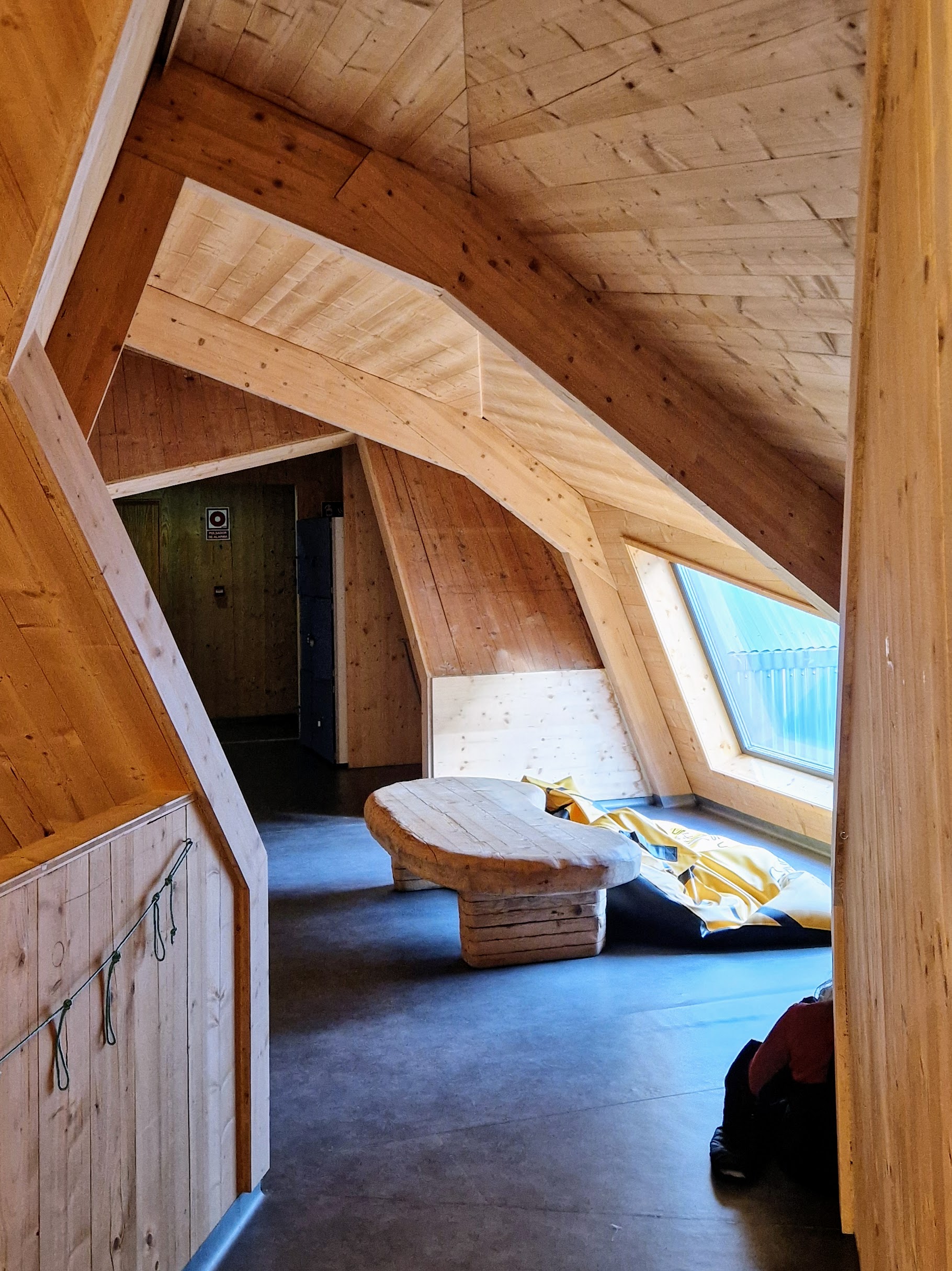
The two main buildings are straightforward gabled volumes, but the small connecting volume has a different roof profile that is moreover asymmetrical. This results in some very intriguing roof intersections over a chill-out lounge with bean-bag seating. The rest of the spaces of this mountain hut are all very regular and efficient; but this small lounge is an architectural exception. In a remote and difficult environment such as this, just a tiny bit of architectural delight goes a long way.
 Criticalista