George Carlin once said: “A house is just a place to keep your stuff, while you go out and get more stuff.” It is the best definition of the contemporary house –and the consumerist lifestyle it engenders– that has ever been coined. How else do we explain the fact that the average house has increased drastically in size throughout history even though families have shrunk? It’s because we buy more stuff than ever, and that stuff takes up a lot of space.
What is even more absurd is how much of that stuff gets dragged along when we travel. Walking the streets of Barcelona, I am always amazed at how much luggage tourists carry. They often push a gigantic roller suitcase (checked baggage), a carry-on roller suitcase (overhead bin), and a daypack or handbag (under the seat in front). The average length of time that tourists visit Barcelona? Five nights.
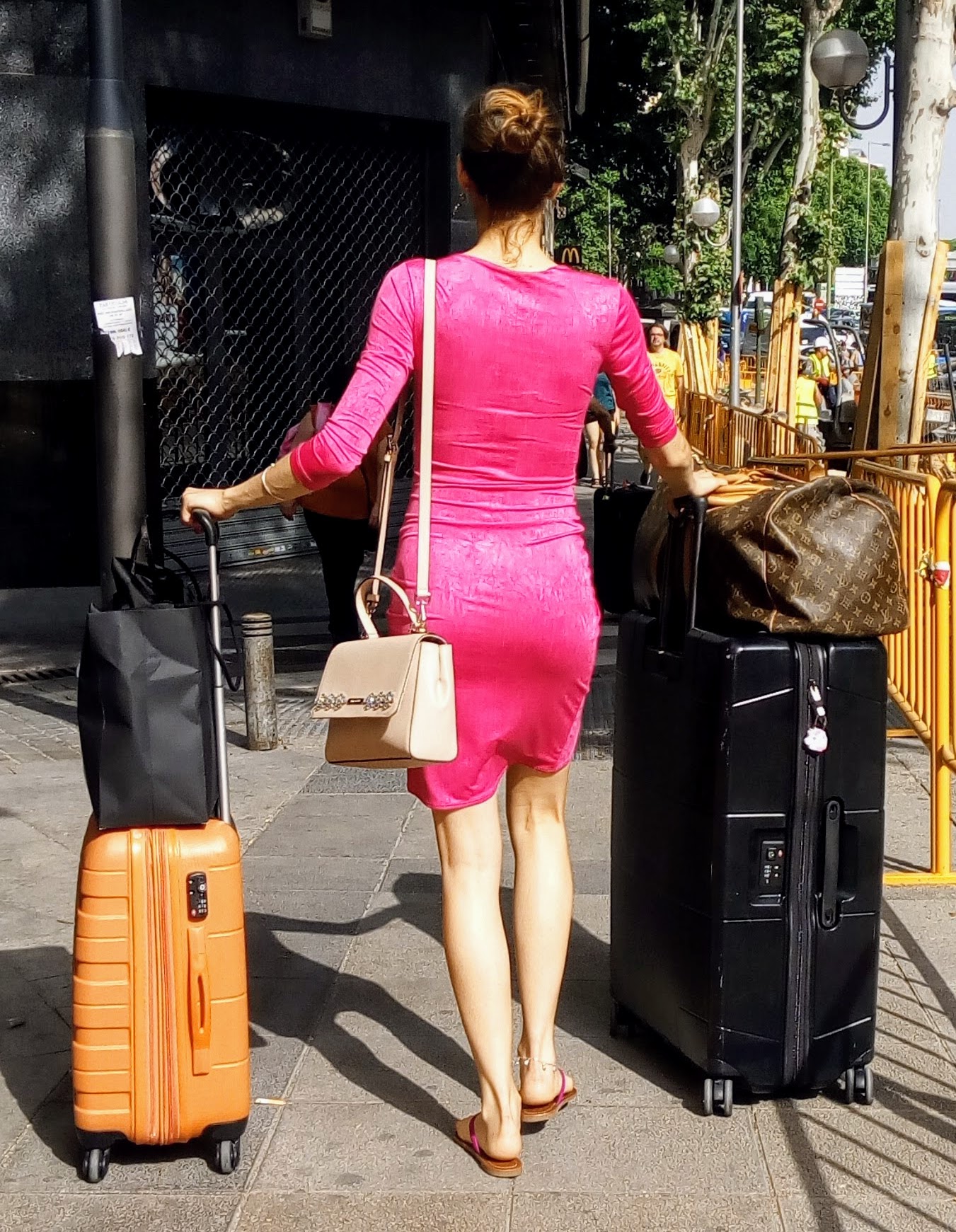
Why on earth would anyone lug so much luggage around? It is cumbersome, more expensive, and it limits mobility, which is the entire premise of travel, isn’t it? This past summer, while holidaying 18 days on Vancouver Island and the lower mainland of British Columbia, my partner and I each carried only a 40 liter backpack. It allowed us to walk around comfortably, hop on and off public transportation, and to dress in accordance with both the weather and the social occasion. I carried only two outfits: “special occasion” (jeans, shirt, and sneakers) and “everyday” (shorts, a few T-shirts, and sandals) along with some changes of socks and underwear and a hoodie in case of cool weather. An umbrella, a paperback book and a water bottle also came along. What more do you need?
If you think that’s minimalist, consider how little I carry when trekking in the Pyrenees for five days. In that case, my 40 liter backpack includes a sleeping bag and food in addition to clothing, which I limit to only one set of extra socks and underwear (the other set gets handwashed when necessary) along with layers of insulation and weather protection that can be combined in case of bad weather. More than that is only extra weight.
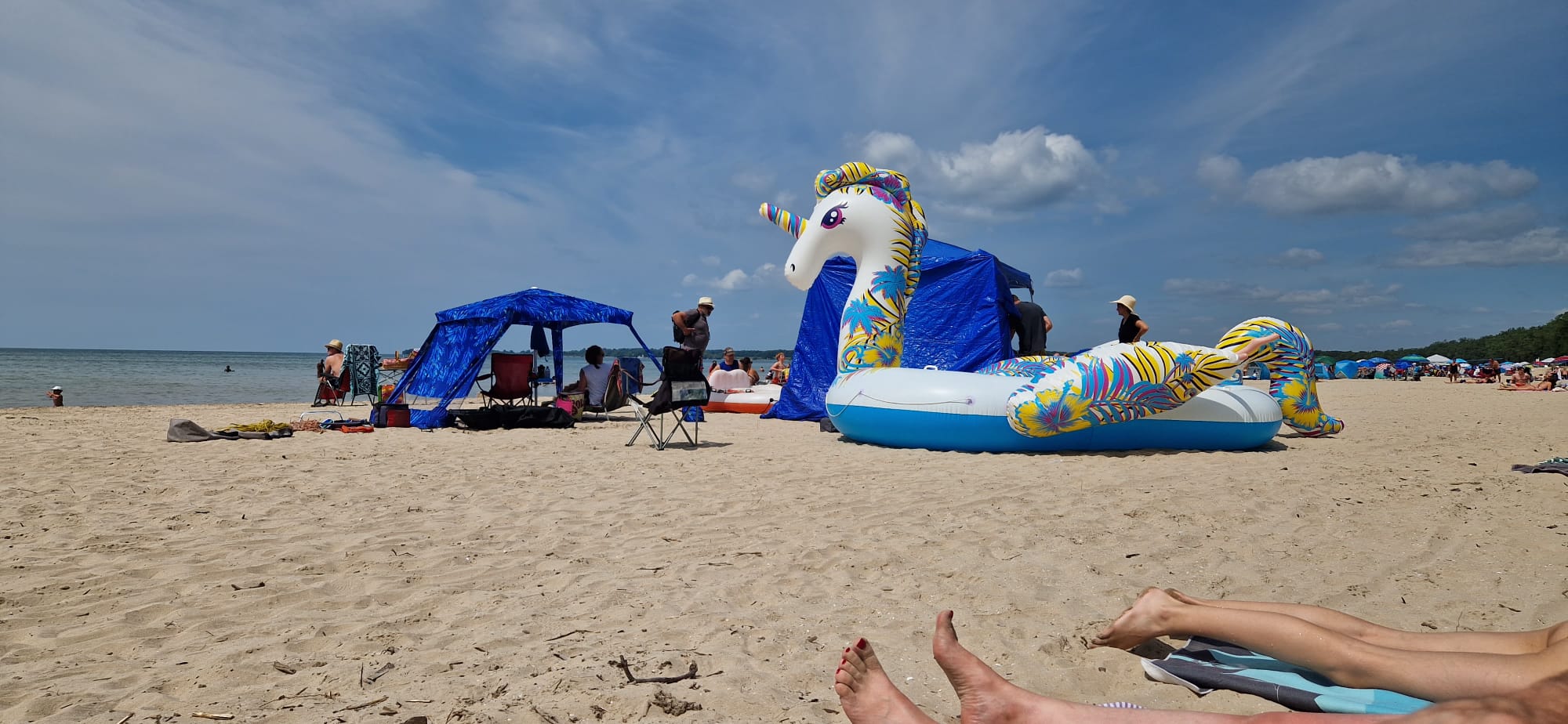
On another trip to Canada, we once witnessed a surreal scene associated with stuff. We were at the Sandbanks Provincial Park beach on Lake Ontario, seated on towels and reading, when a group of about a dozen people showed up to enjoy a day at the beach. Instead of beach towels, they brought along folding chairs and set those up. Then they left and returned with a few foldable tables, a portable gas barbecue, several coolers, and two portable shade canopies. But that was still not all. They left again and came back with a heavy-duty portable sound system as well as a gigantic inflateable unicorn for them all to sit on in the water. To transport all those things, at least three full-size pickup trucks must have been used. Here we were, sitting on beach towels with only a water bottle, sunscreen, and a book; not even a parasol. It took the group more an hour and a half just to set up their compound of stuff. When they finally finished, and started blasting their sound system, it took us only one minute to pack up and move somewhere quieter.
Living lightly is highly liberating. Does owning tons of stuff really make you happy? How often do you buy new stuff just because the old stuff –while still functional– is aesthetically out of style? Then there’s the new stuff that has to be bought just because the not-so-old stuff has stopped working and cannot be repaired because it has been intentionally designed to be discarded (so that you are obligated to buy it over and over again!).
There are all kinds of ecological reasons not to buy so much stuff we don’t need. But even if those reasons aren’t good enough, the greater convenience of lightness should convince even the staunchest right-wing suburban fundamentalist to lighten up.
Try it. Stop being weighed down by stuff. Stop shopping. You might discover a new kind of freedom.

