[Originally published in The Architectural Review August 2025]
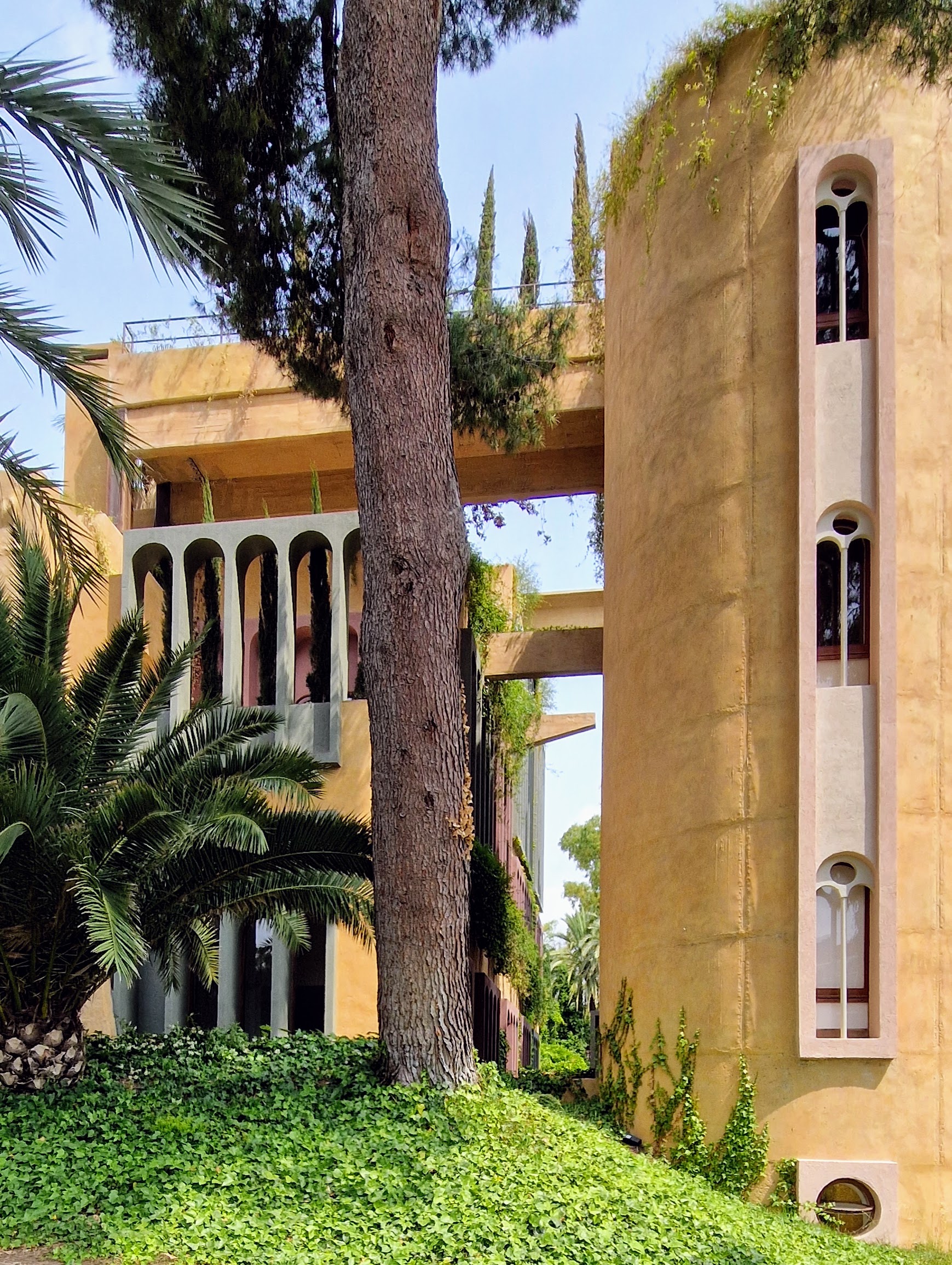
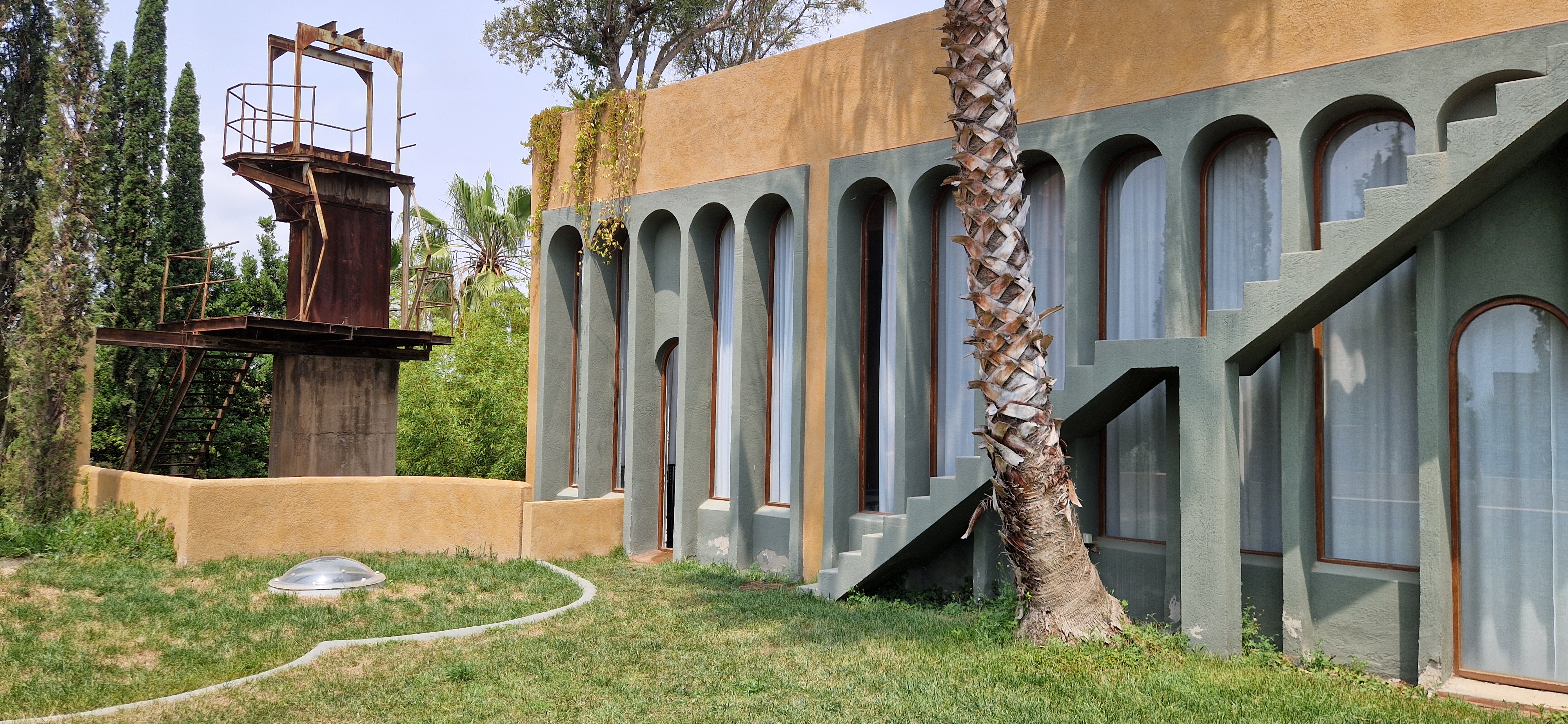
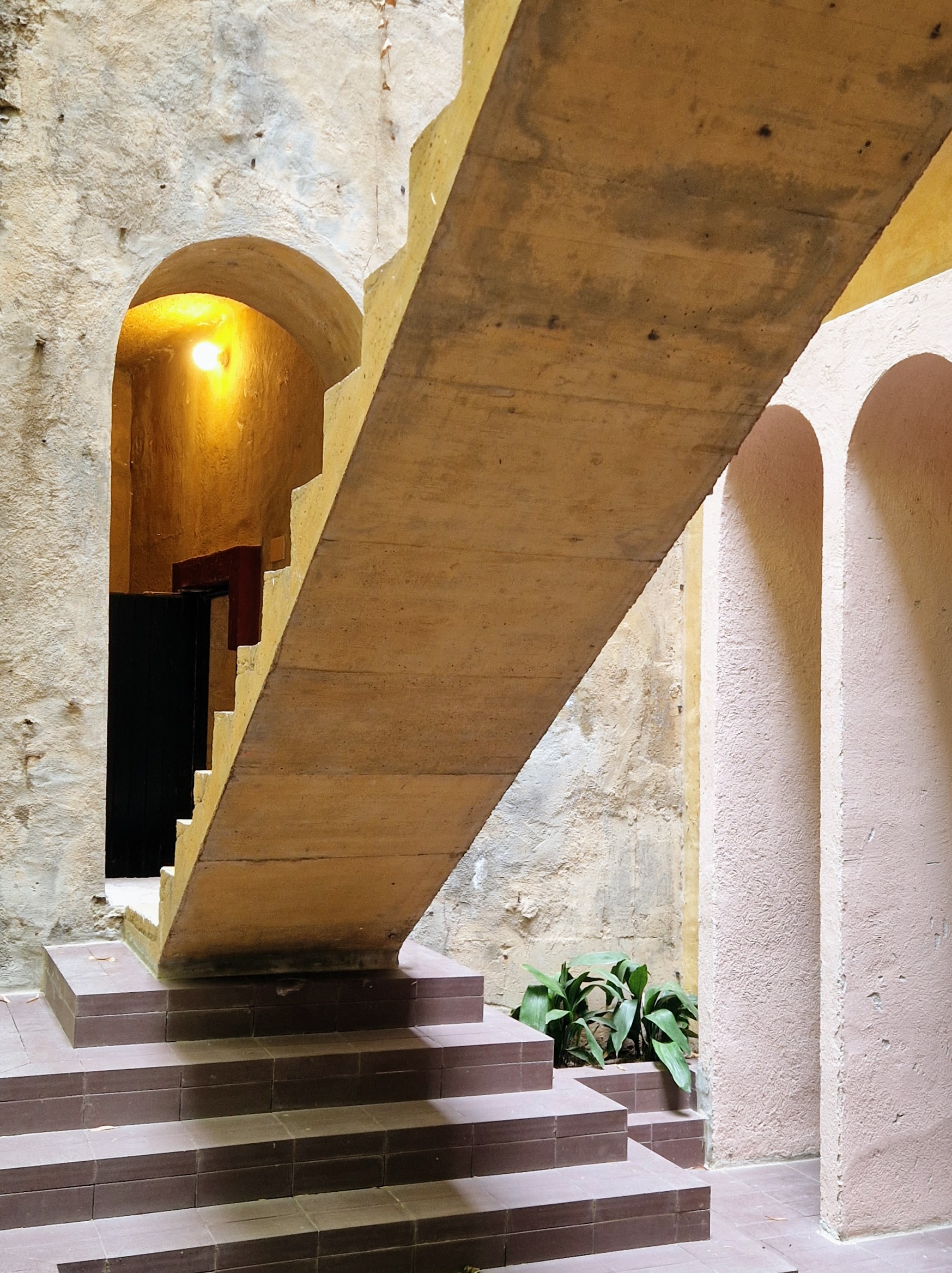
Ricardo Bofill lived and worked in La Fábrica until his death in 2022, constantly transforming it. ‘The factory will always be a work in progress, which is part of its fascination,’ he once wrote. The site continues to undergo transformation today; upon approaching the entrance gate, a pair of old, very thick and tall concrete walls were recently stained in ochre, partially concealing the ageing material beneath. Inside the grounds, new paint has been applied to interventions more than 50 years old, making them appear new again. These recent renovations reveal La Fábrica’s fluctuating identity, inciting change while adapting to change itself.
Bofill and his Taller de Arquitectura began work on La Fábrica in the early 1970s, at the height of a gloomy period often referred to as la Barcelona grisa (grey Barcelona). Spain was under a brutal military dictatorship, Barcelona’s industry was in decline, the city was terribly polluted and urban development mostly bland and uninspired. Bofill, who belonged to the clandestine Partit Socialista Unificat de Catalunya (Unified Socialist Party of Catalonia, or PSUC), was arrested and jailed on more than one occasion by Franco’s police, known as los grises (the grey ones). The only splash of colour back then was a bright red stain, a ‘blood spill’ created with paint by protesting architecture students on the seven‑storey facade of their school.
In this context, La Fábrica was intended as an act of resistance, ‘a built manifesto’ in Bofill’s own words. ‘During my first visit, I suddenly thought that something horrible could be transformed into something very beautiful, just as idiocy can sometimes be transformed into genius.’ With its machine halls, 30 concrete silos, 4km of underground tunnels and the then tallest smokestack in Europe, the 1917 LACSA cement factory was slated for (very costly) demolition after production had moved to a new facility, enabling Bofill to acquire the site. In 1973, he began transforming its heavy‑industrial architecture into the veritable monastic complex of workspaces, residences and gardens that it is today – a defiant act of hope and imagination during grey times.
It certainly was not practicality that motivated Bofill to embark on such a large and complicated project, nor a concern over embodied carbon – although it was known at the time, anthropogenic climate change was almost absent in architectural discourse and adaptive reuse was a relatively new idea. On one hand, there was a growing heritage movement that sought to save important buildings from rampant ‘urban renewal’ by giving them new uses. On the other, New York’s thriving arts scene had begun to live, work and party in the city’s inexpensive light‑industrial spaces. Andy Warhol called his first studio The Factory in 1963, the same year Bofill’s Taller was formed by a group of architects, filmmakers, poets, philosophers, engineers and mathematicians.
Unlike Warhol’s Factory in mid‑town Manhattan, La Fábrica is situated far from the city centre. At the time, Spanish artists and intellectuals often sought refuge from the prying eyes of neighbours, clergy and police, many gravitating to remote villages if not foreign lands altogether. A factory in an industrial area offered a possibility of refuge and therefore freedom. La Fábrica was to be a built manifesto and a declaration of liberty.
Transforming La Fábrica was much more complex than merely covering interior walls with aluminium foil. It involved a process of selective demolition using dynamite and jackhammers – the only ‘plans’ being photographs of the factory with certain forms highlighted and others crossed out. Spaces and forms were gradually discovered among the ruins, suggesting possible uses –the opposite of function as a planimetric determinant of form. Anti‑functionalism was a growing sentiment among architects and critics, including Charles Jencks, a friend of Bofill’s. Through this rather improvised process, certain silos and machine halls were kept and others demolished. Fragments such as the colossal concrete walls near the entrance were preserved for aesthetic reasons, while the gigantic, rusted steel silo funnels and machine parts visible throughout La Fábrica effectively ‘function’ as ornament of sorts. The entire ensemble can be seen as a collection of garden follies. […]
[Please continue reading at The Architectural Review]

 Criticalista