From 2005 to 2013, I taught a seminar in the Metropolis Masters Program in Architecture and Urban Culture titled “LandSpec” in which we investigated how land speculation was changing the architecture of the city in different parts of the world. Students brought many fascinating examples of real estate products that were “hot” in their respective homelands, among which the most common was the luxurious residence in a high-rise tower. Often cramped and badly designed, these high-rise residences usually overlooked similar towers nearby, and between them glimpses of distant landscape. This real estate product is sold almost everywhere, from Benidorm to Hong Kong; Panama City to Vancouver.
Fast forward a decade, and there’s now a global housing crisis. The cost of owning or renting a home has risen much more steeply than other living expenses, causing very serious problems. Homelessness is growing by leaps and bounds, and many families are being forced to relocate to cheaper outlying neighborhoods –and commute longer distances– just to be able to make ends meet. The housing crisis is even affecting the sexual habits of young people. And the main reason for this housing crisis, it turns out, is none other than property speculation, which has become a highly lucrative way to turn a quick buck among international “investors” (aren’t foreign investors supposed to improve a country’s economy?). The question that arises is: did that boom in luxury residential high-rise towers provoke this housing inflation? Or is that building type merely a response to inflation? It’s a chicken and egg question. What is clear is that the residential tower is not an affordable housing option.

The condo towers of Vancouver were initially lauded for introducing residential uses into what was previously a monotonous downtown consisting almost exclusively of office towers. Residential towers originally made sense within a context of office towers, but lately they have been getting built in places where towers were previously non-existent. Why? Speculators love them.

Is there, then, an alternative building type that doesn’t lend itself to speculation, and that is therefore more affordable? No. Speculators can flip anything, so there is no such thing as speculation-resistant architecture. The only way to deal with speculation is therefore to disincentivize it using legislative and fiscal means. Property taxes need to be raised on homes that sit empty, foreign and corporate property ownership needs to be severely taxed or prohibited outright, and zoning regulations need to be changed to prioritize building types that are more affordable.
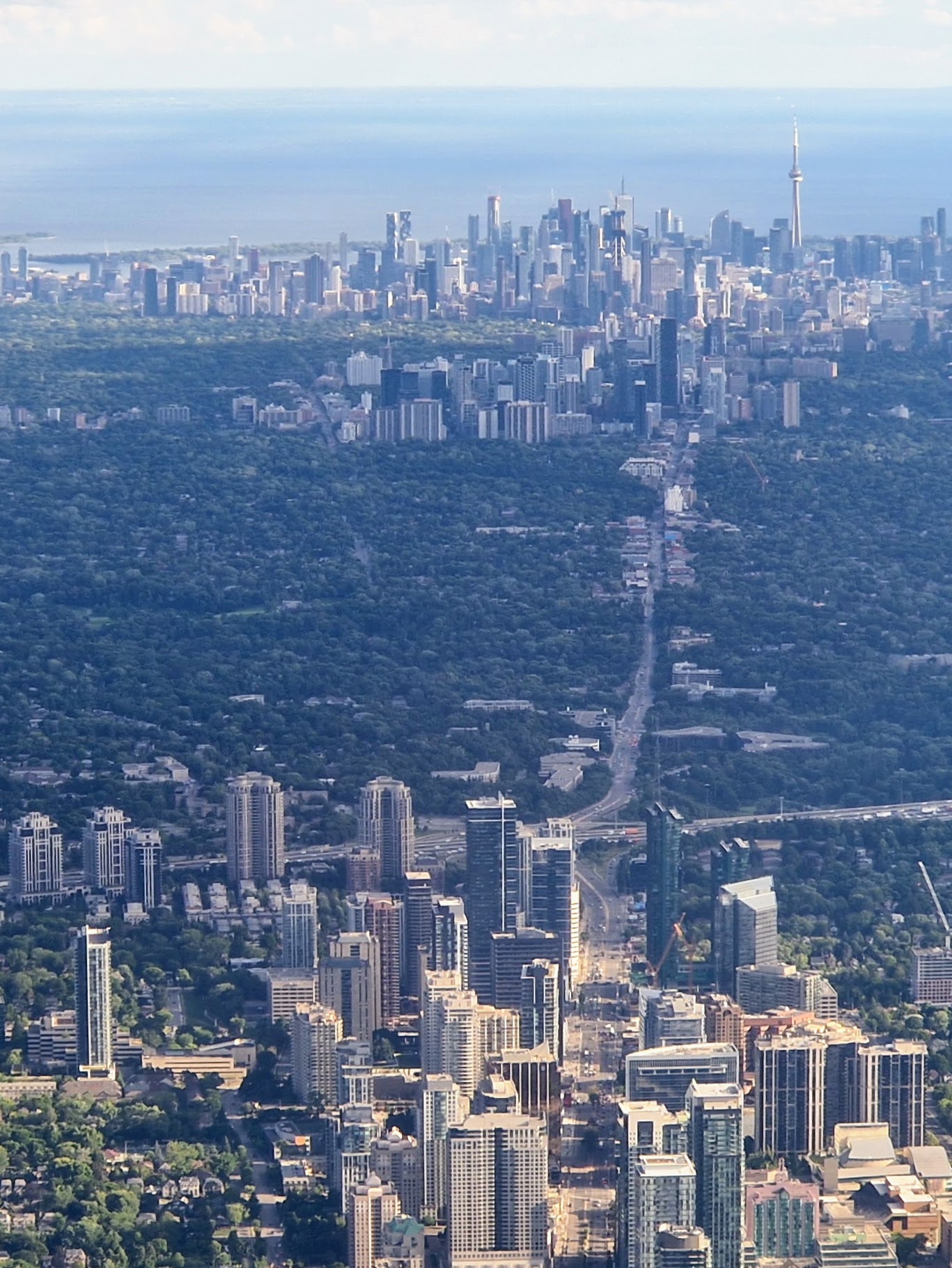
Yes, there are building types that are fundamentally more affordable than others. Buildings that are efficient in their use of space, construction materials, and energy consumption will always be cheaper to live in. The high-rise is in fact the most expensive type of building to construct and maintain. Structurally, tall buildings not only have to resist more concentrated dead and live loads, but also wind, a force that acts more powerfully the taller the building. Skyscrapers are effectively vertical cantilevers with respect to wind, requiring exponentially stronger structures the higher they reach.

Towers are also highly dependent on expensive elevator systems and much more complex mechanical systems than other building types. The tall building may make efficient use of land, but it is inefficient in every other respect. Only exorbitantly high land values can justify the extra expense of high-rise. There is therefore no such thing as “sustainable high-rise.”

The single-family detached house in suburbia, by contrast, is the cheapest form of housing to construct. The land is cheap, and cheap balloon frame construction technique can be used. However, the low urban density of suburbia makes public transit unviable, requiring mass-ownership of private automobiles and expressways that are a huge public infrastructure expense. Buying a car for every driving-age member of a family, maintaining it, fueling it, and insuring it adds up, not to mention the added cost of all the time spent commuting and sitting in traffic jams. A detached dwelling is also more expensive to heat and cool than one that is clustered with other dwellings. If suburbs weren’t so heavily subsidized they would be unaffordable to most.
If both high-rise and low-rise are unaffordable, then the only option left is mid-rise housing. Common throughout Europe as well as older American cities such as Montreal or Boston, these are buildings anywhere from 3 to 10 stories in height containing stacked dwellings, often situated above ground-floor institutional or commercial retail units.
Mid-rise is by far the most affordable housing type from the point of view of construction, energy, and maintenance costs per square meter. Its aggregation creates walkable and cycleable neighborhoods that are sufficiently dense to make public transit viable, significantly lowering transportation costs and commuting time. The structural system of a mid-rise is straightforward, with building codes in many countries (except North America) permitting reasonably-sized mid-rise buildings below 10 stories to contain only a single staircase and elevator, which makes for much greater affordability than the minimum two staircases and multiple elevators required for towers.
It’s a no-brainer: if we want to build housing that is more affordable, then we need to focus on mid-rise. It’s not a new building type at all (Ancient Romans built mid-rise!), so the technology is there. It can be built with low-carbon fire-resistant materials such as stone or mass-timber. It is highly adaptable to differently sized, shaped, or sloped sites, and doesn’t require consolidating large parcels of land or building expensive new infrastructure. The only thing standing in between? Political will.

 Criticalista
Excellent article from which I learned a lot. Thanks!
Good article Rafa.
I agree with you on many counts. In particular where you say there is no building type that is immune to speculation and that high-rise construction is partly driven by exorbitantly high land values.
However, as we see here in Vancouver, prices for mid-rise units are as expensive or more than those in high rises. With very high land values the differences in construction cost is outweighed by the amount of density you can put on a site in determining the cost of a home/unit. There are many factors affecting cost and, indeed, sustainability (a topic for another day). Certainly foreign ownership of investment properties has been one factor that has distorted the market here. Other factors that has forced prices up are the constraints on the amount of buildable land that we have here. These limits are partly geographical and partly political. Vancouver is bounded by sea to the west, mountains to the north, protected fertile agricultural land to the east, and the US border to the south. This increases the pressure to build up.
Despite various limitations and challenges, it is certainly feasible, though more difficult, to assemble larger land areas and build more mid-rise projects. Where this is being done, though, the housing is no more affordable to the average wage earner than a dwelling in a tower.
What has been clear to me for some time, and is increasingly so to many, is that the “free market” is not going to provide affordable housing in Vancouver. Building more and more units in more and more towers, or mid-rise buildings, has not increased housing affordability at all. Land is simply too valuable and expensive. So, now in Vancouver, we have municipal policies forcing developers to include a certain percentage of “below-market” housing in new developments. This is increasing the supply of affordable housing but it is still not enough. The solution is to build government-funded social housing as has been done in many large cities where housing has become unaffordable. There is a role for the market in increasing the supply of housing, affecting prices overall, but the market itself is not providing good, livable, and affordable housing for young people with low or average wages and their families who live and work here.
Of course, there are complications too with social housing – for me the biggest issue is who gets to live in it. Maybe other cities have got this figured out. Vienna? Much more to be said on this but I will let you write the essays. I am just providing comment.
As with so many of the biggest challenges we face, such as addressing climate change, or providing affordable health care, the free market is mostly failing to deliver affordable housing in places like Vancouver. Pragmatic government intervention at the appropriate scale is needed.
The form of the cities we choose to build should be the form that works best for people and communities. There is much social science data now to inform decision-making on zoning and other land-use policies. I don’t think there is a one-size-fits-all solution but certainly mid-rise construction has proven a good city-building form in many places over the decades.
Thanks for your comment, Andrew.
It’s a vicious circle, isn’t it? As land values rise, developers pressure authorities to ease height restrictions so that they can keep unit costs down through increased density. But then, when the height restrictions are eased, that land shoots up even more in value, resulting in unit costs not coming down at all. It’s madness.
Yes, mid-rise residential sells for just as much as high-rise. But at least mid-rise doesn’t emit as much CO2 as high-rise (since it is technologically less complex) while achieving the same urban densities (see https://jnolan.shinyapps.io/city-density/ and compare Barcelona’s mid-rise core to Vancouver or New York City’s high-rise cores).
High land values make all housing expensive. Yes, the public sector needs to step in and provide affordable housing if nobody else is doing it. And while they’re at it, they should also stop easing height restrictions so that an end is put to high-rise madness.