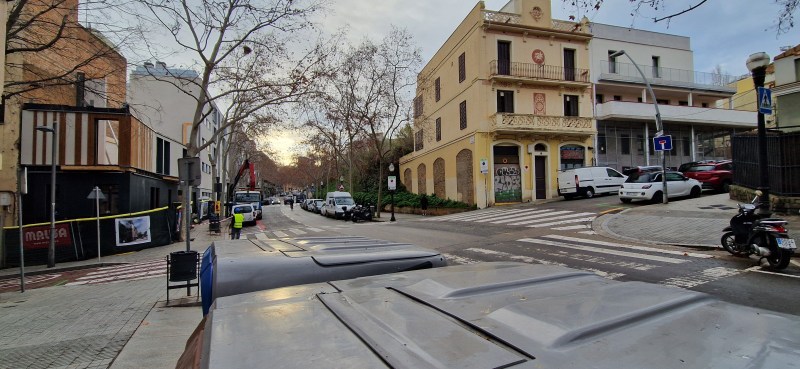
Two radically different apartment buildings are currently being completed only meters apart in Barcelona’s Poble Sec neighborhood. What makes them interesting to compare is that both are initiated by architects: one is an apartment building for “short-term” stays by an architect who is also a real-estate developer, while the other is an experimental affordable housing project by a group of architects and social entities. The respective architectural designs reveal very different sensibilities consistent with very different sets of values.
……………………………………….
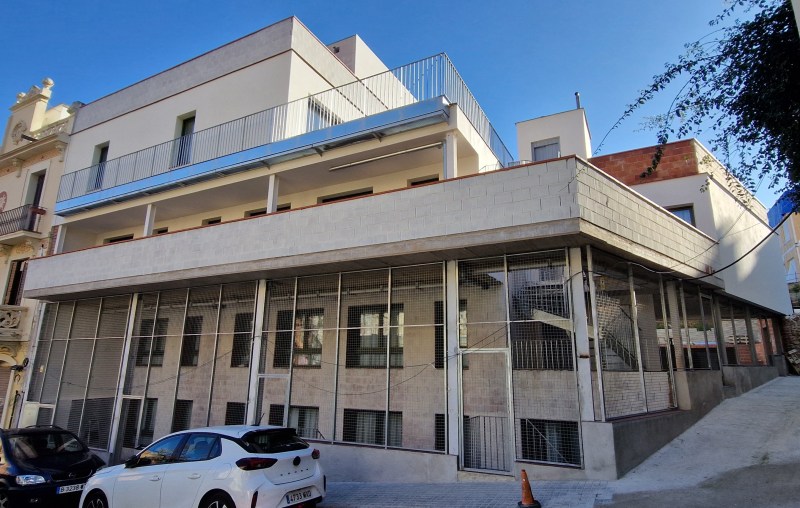
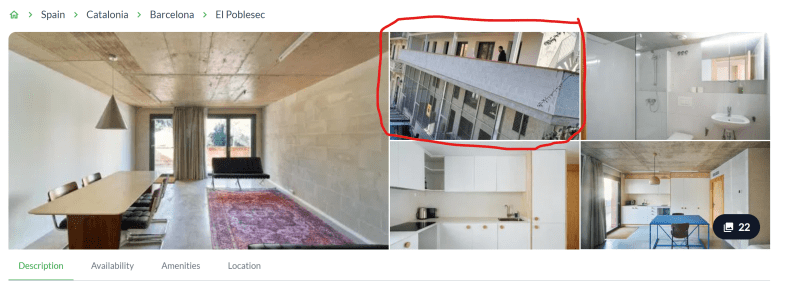
The above apartment building (by architect-developer Elisabet Cristià) is intended for short-term stays, which is to say fully furnished accommodation intended for tourists, digital nomads, CEOs, or visiting academics. Constructed of concrete, steel, and masonry on a sloping site, the building consists of two levels of mostly two-story apartments. The lower level is accessed directly from the sidewalk through a large porch while the upper level is accessed via an elevated “street-in-the-sky” walkway reached by a stair and elevator. Some of the lower level apartments are semi-sunken into the sloping site, necessitating flights of stairs descending from the sidewalk to the front porch.
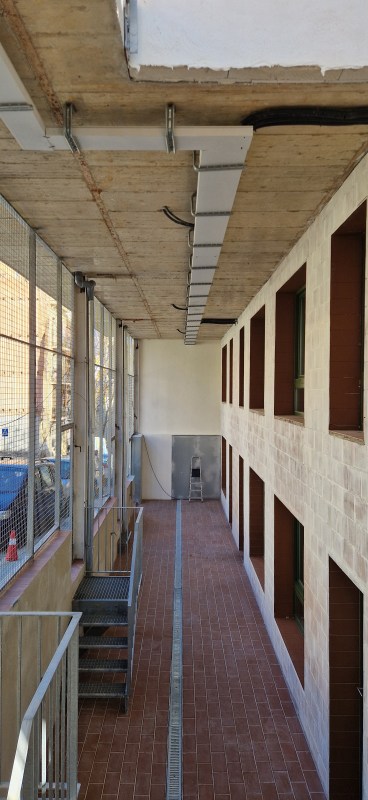
The entire ground-level is caged in by extensive double-height steel mesh; a tough aesthetic that is reminiscent of the US military’s Guantanamo Bay Detention Camp (the only thing missing is extensive razor wire). As the apartments are intended for short-term occupation by visiting foreigners, curb appeal is not a priority, whereas the perception of safety and security most certainly is. The cage serves to physically separate visitors inside from neighbors outside, ensuring maximum security in a city internationally notorious for its petty crime (although violent crime is rare in Barcelona), while the amenity of a “private outdoor space” allows the owner to charge a higher rent.
The semi-sunken porch also serves, of course, to “flatten” the sloping site and thereby maximize the number of dwelling units. It is unlikely the short-term occupants will personalize and thereby soften the prison-like porch space, for example by growing plants in it. Visitors don’t have time for gardening, which is a long-term activity.
Tourist apartments have been banned by Barcelona City Council as of November 2028, so this building will probably have to be converted into normal housing at that point. Hopefully that will lead to the removal of the offensive steel mesh and the personalization of the porch by dwellers.
…………………………………
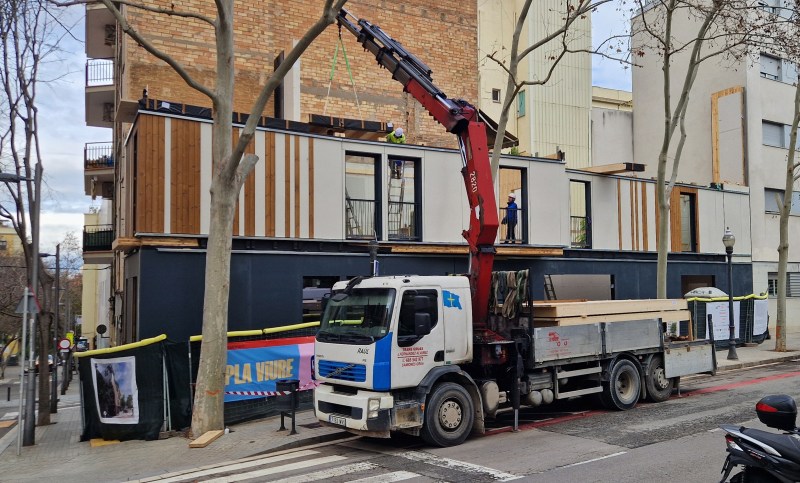
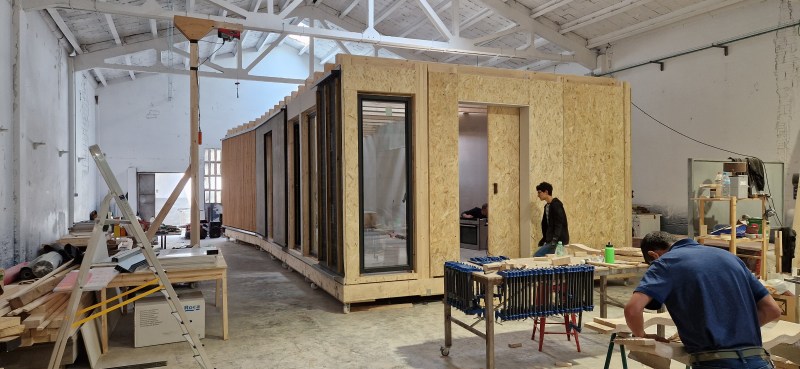
The above building, initiated by a consortium of architects and social entities (Straddle3, Societat Orgànica, IDRA), is constructed of mass-timber components that have been prefabricated in a warehouse by local youth participating in WikiHousing, an initiative to teach young people construction skills so they can access housing using “sweat equity.” The project is sponsored by construction manufacturers and suppliers who have made in-kind contributions as well as by Barcelona City Council, which has provided the land and is covering part of the construction cost. It is a participatory community project that is also experimental, as it tests new affordable housing models and methods.
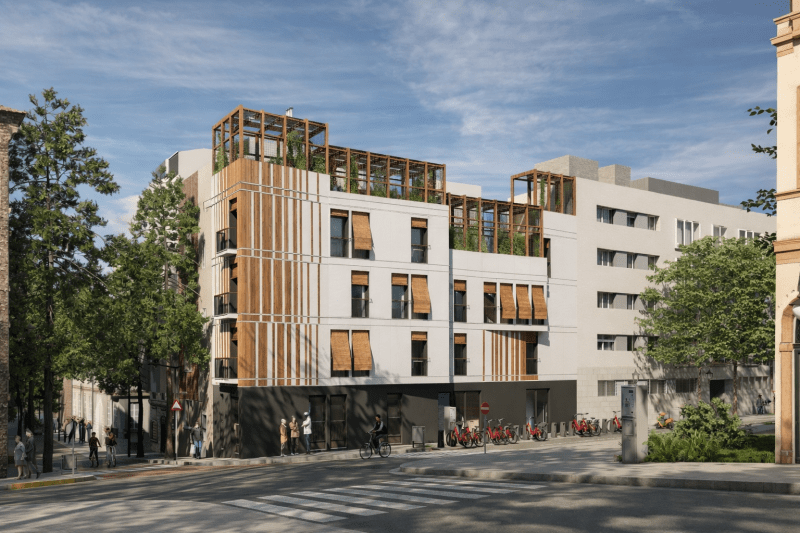
The site is a long and narrow corner plot only a few meters wide that has long stood abandoned. Entire components of the pre-fabricated dwelling units are being delivered to site on flat-bed trucks and then hoisted into place, making for speedy assembly. The compact building is consistent with the most traditional and prevalent building typology in the city: stacked single-story dwellings accessed from a central stair. The innovation lies more in the collaborative design process and participatory “hands-on” prefab building method. When finished, the four-storey building will be topped with a communal roof garden and be inhabited by young persons who participated in its prefabrication.
…………………………………………….
As is evident, the two neighboring buildings and the two entrepreneurial models couldn’t be further apart. One building is a tough high-security compound built with regular materials, while the other is a traditional building type built innovatively using sustainable and renewable timber. One initiative seeks to maximize profit, while the other seeks to maximize social and ecological value. One worsens Barcelona’s housing affordability crisis, while the other attempts to alleviate it. One deserves disapproval, the other deserves recognition.
 Criticalista