[Originally published in The Architectural Review July/August 2018]

Matola, a hamlet in the semi-desert of the southeastern Spanish province of Alicante, Valencia, is a tiny crossroads that sports a community centre, health club, hardware store, supermarket, bakery, and several bar-restaurants specialising in local rice dishes. Beyond this loose concentration of roadside businesses, however, lies a sprawl of large residential lots tightly enclosed by fences, gates and hedges that shield every style of house, from modest vernacular constructions to neo-neo-classicism or the latest in narco-Minimalist neo-Modernism, a style loosely inspired by Le Corbusier’s white period that seems to appear in Spanish news media whenever a drug lord or political leader is arrested.
Matola’s semi-rural residential fabric exemplifies a kind of exurban sprawl found throughout Europe. What makes Spanish exurbia unique, however, is that much of it consists of second homes. It is not unusual, especially in Valencia, for a family to live in a flat in town during the week, and to spend weekends and Spain’s long summer holiday period just outside town —sometimes only minutes away— in a rural retreat. For wealthier families, a third property on the coast, or even a fourth at a Pyrenees ski resort is not unheard of; real estate comprising one of Spain’s largest economic sectors, not to mention one of its cesspools of financial / political corruption.
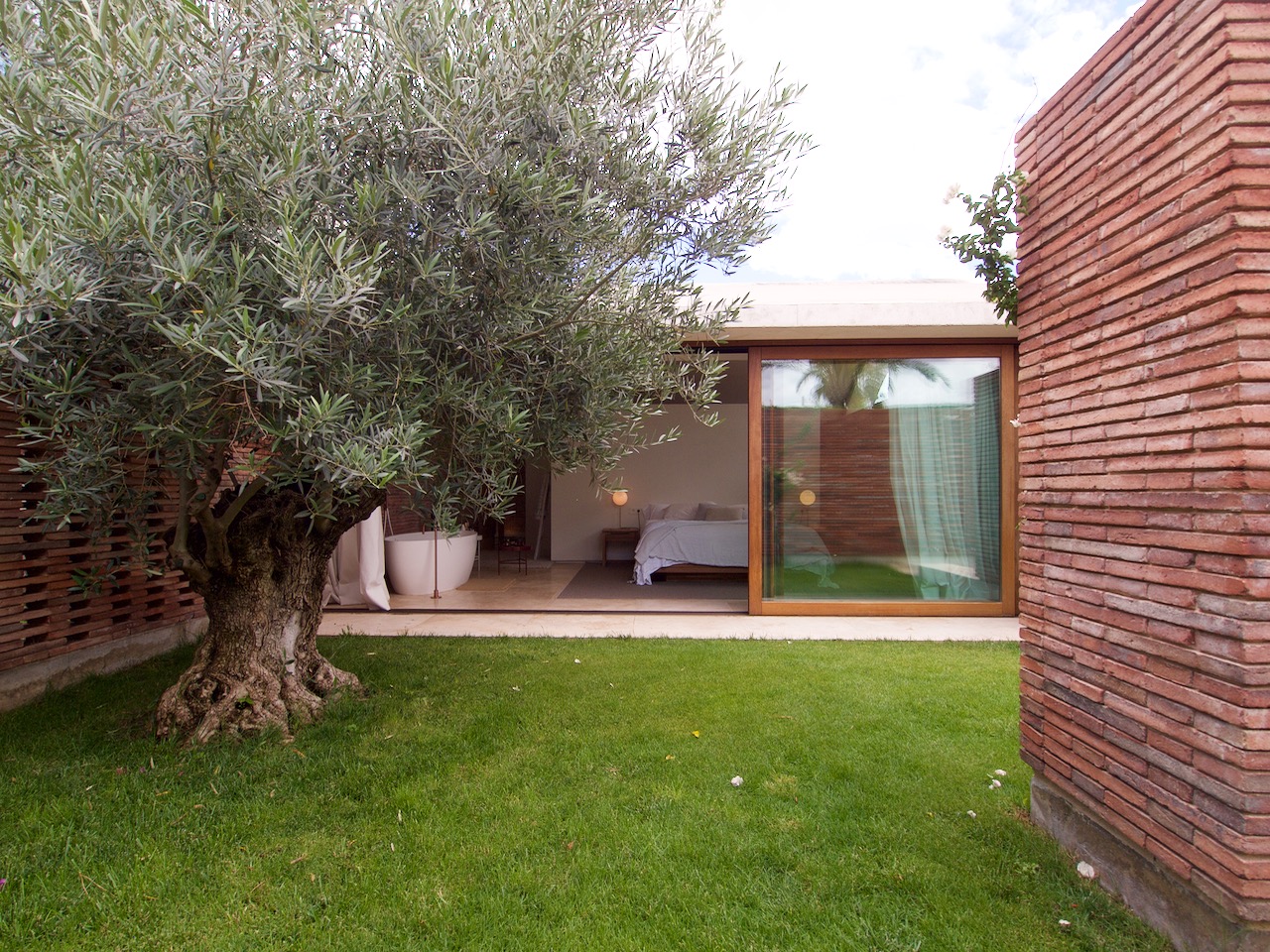
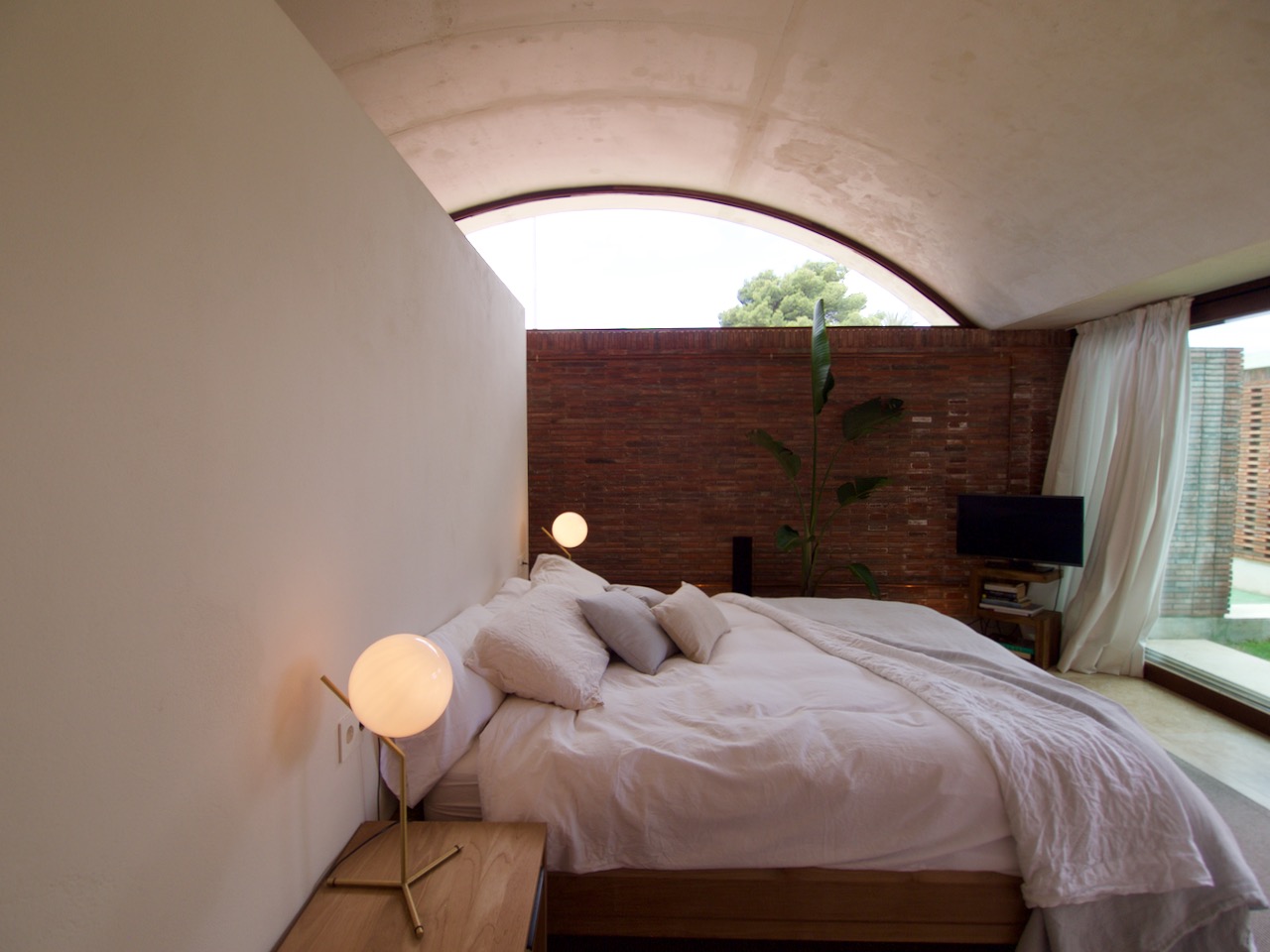
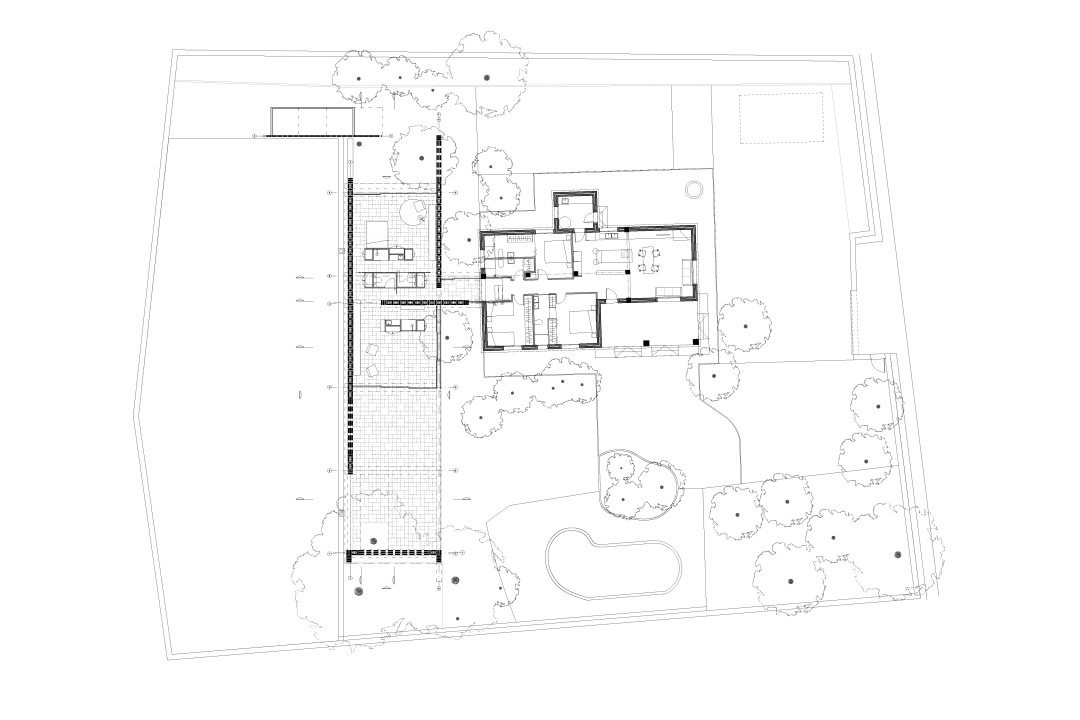
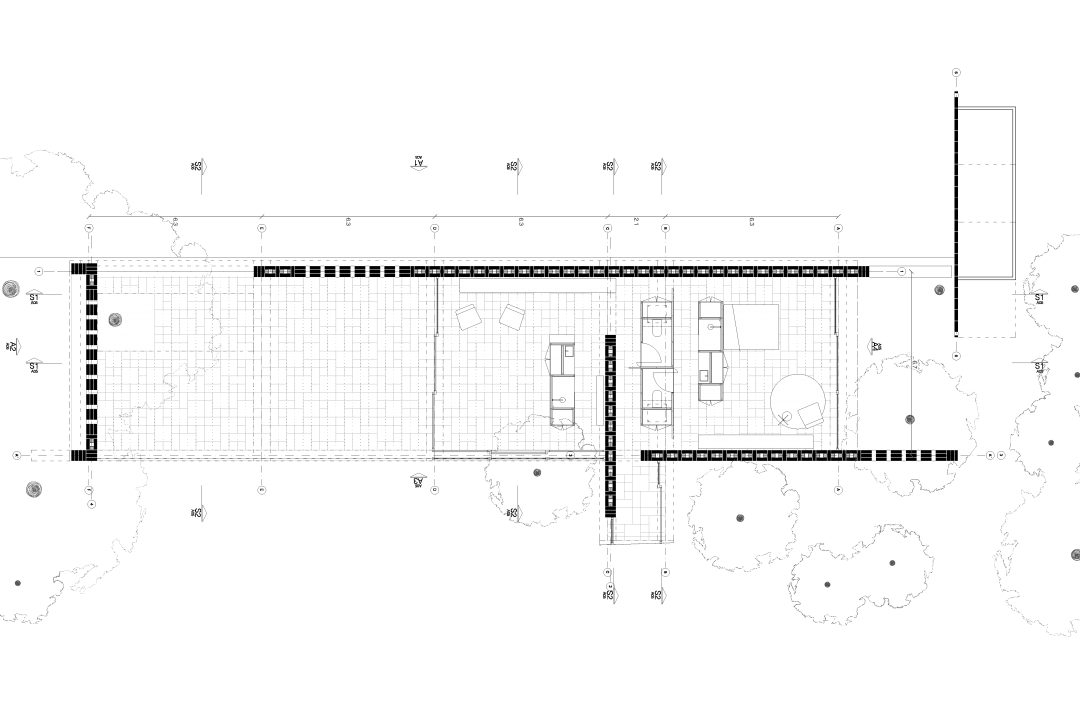
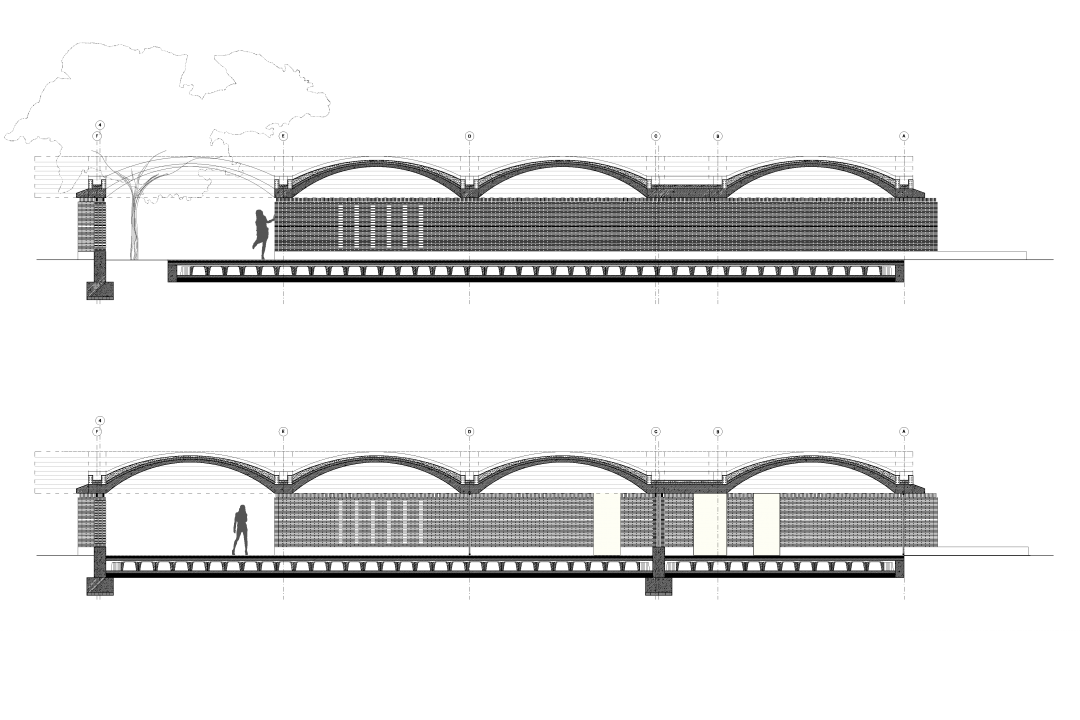
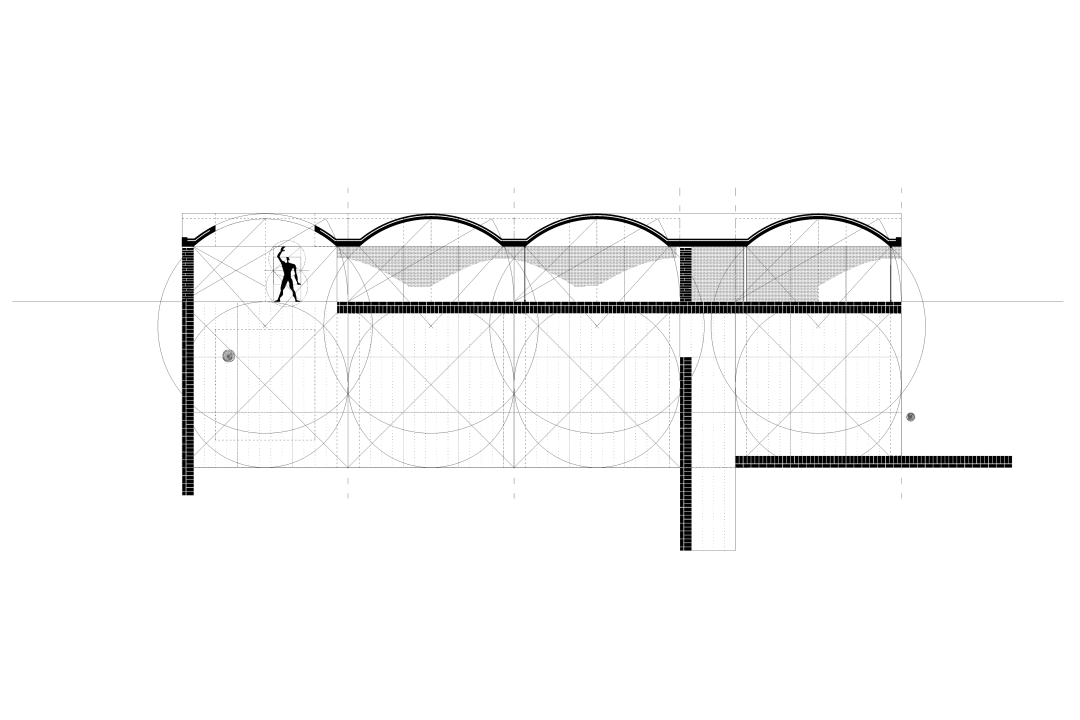
On a typical Matola rural lot of about a quarter of a hectare, Casa IV (no relation to Peter Eisenman) is an extension to a modest, single-story house of 1980s vintage. What makes Casa IV significant, in addition to its highly considered architectural design and its beautiful spaces and details, is a siting strategy that orders and structures a dispersed collection of pre-existing amenities: a driveway, carport, house, swimming pool, tennis court and garden shed; all sited on one large lawn surrounded by a hedge and chain-link fence; a microcosm of the larger sprawl beyond. The project transforms its site into a rich landscape of semi-enclosed garden spaces, each with its own distinct quality, degree of intimacy, and micro-climate. A work of “landscape architecture” in the fullest sense of the term, Casa IV exemplifies how even a relatively small architectural object can create coherence beyond its walls; becoming much more than merely a figure against an assumedly neutral ground.
The brief presented to Mesura Arquitectura by the client, a Barcelona family with three grown-up children and roots in the nearby town of Elche, was to enlarge an inherited house used as a holiday home. Concretely, a new guest suite at the back and an expansion of the house’s porche, an exterior dining room typically situated in a corner of a Valencian house and protected from the sun by a generous overhanging roof (in Spain, the Sunday family meal is typically a mid-day rather than an evening feast). The brief sums up the scenario of a house becoming too small when the sentimental partners of grown up children and eventually grandchildren start to show up at family get-togethers.
[To continue reading, please visit The Architectural Review]

 Criticalista
I love this design! Beautiful!