“Imitation is the sincerest form of flattery that mediocrity can give to greatness.” -Oscar Wilde.

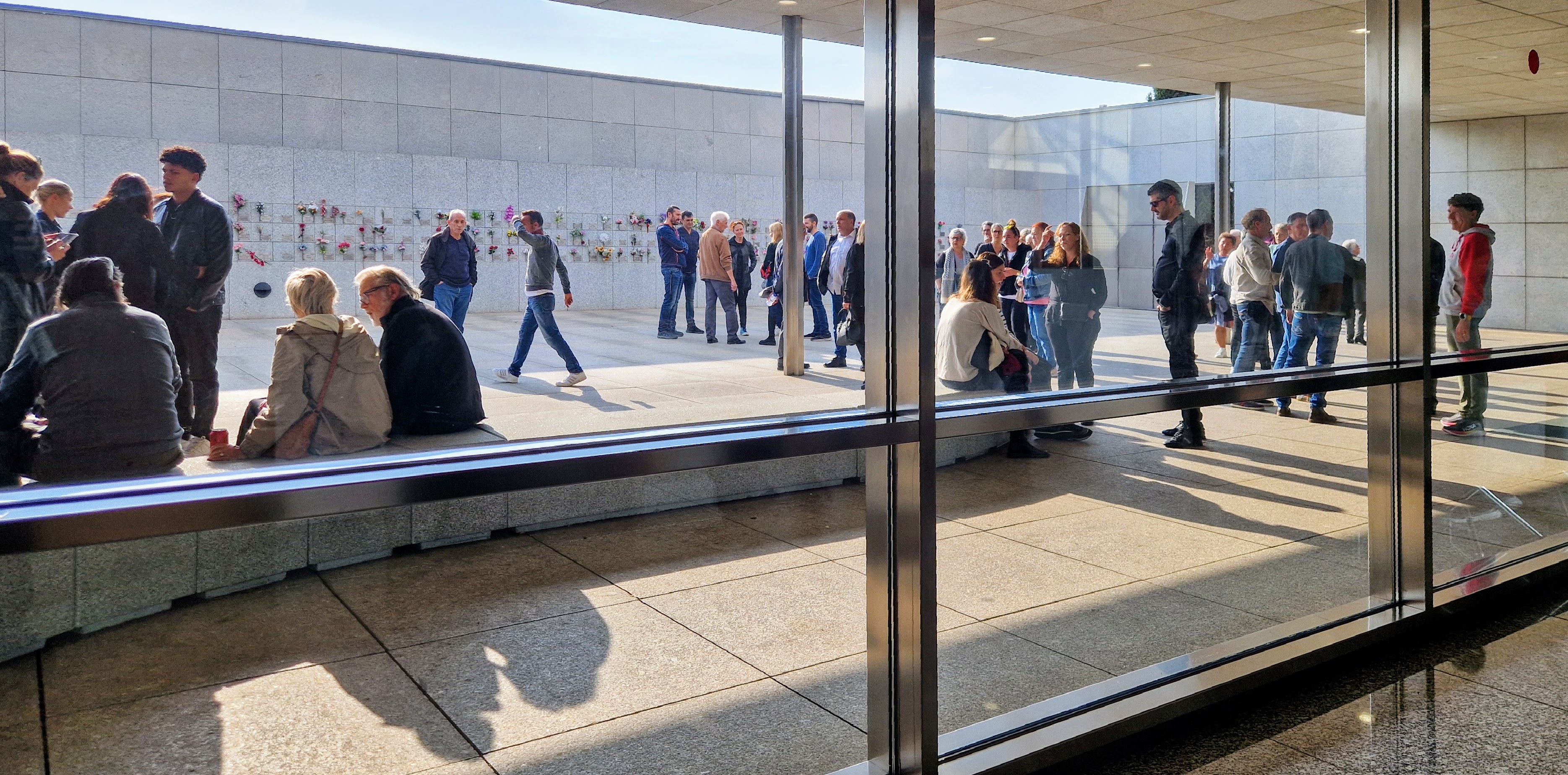
From the outside, the Crematorium of Barcelona blends rather unsuspectingly with the many miles of stone burial walls that cover the slopes of that city’s Montjuïc cemetery. But an entirely different architecture greets the visitor upon entry into the crematorium’s courtyard. The stone is now more polished and hangs in the form of panels, there is a long wall of floor to ceiling glass with stainless steel mullions, and the columns supporting a flat roof are cruciform-shaped and clad in stainless steel. Seem familiar? We are at a Barcelona Pavilion-inspired crematorium.

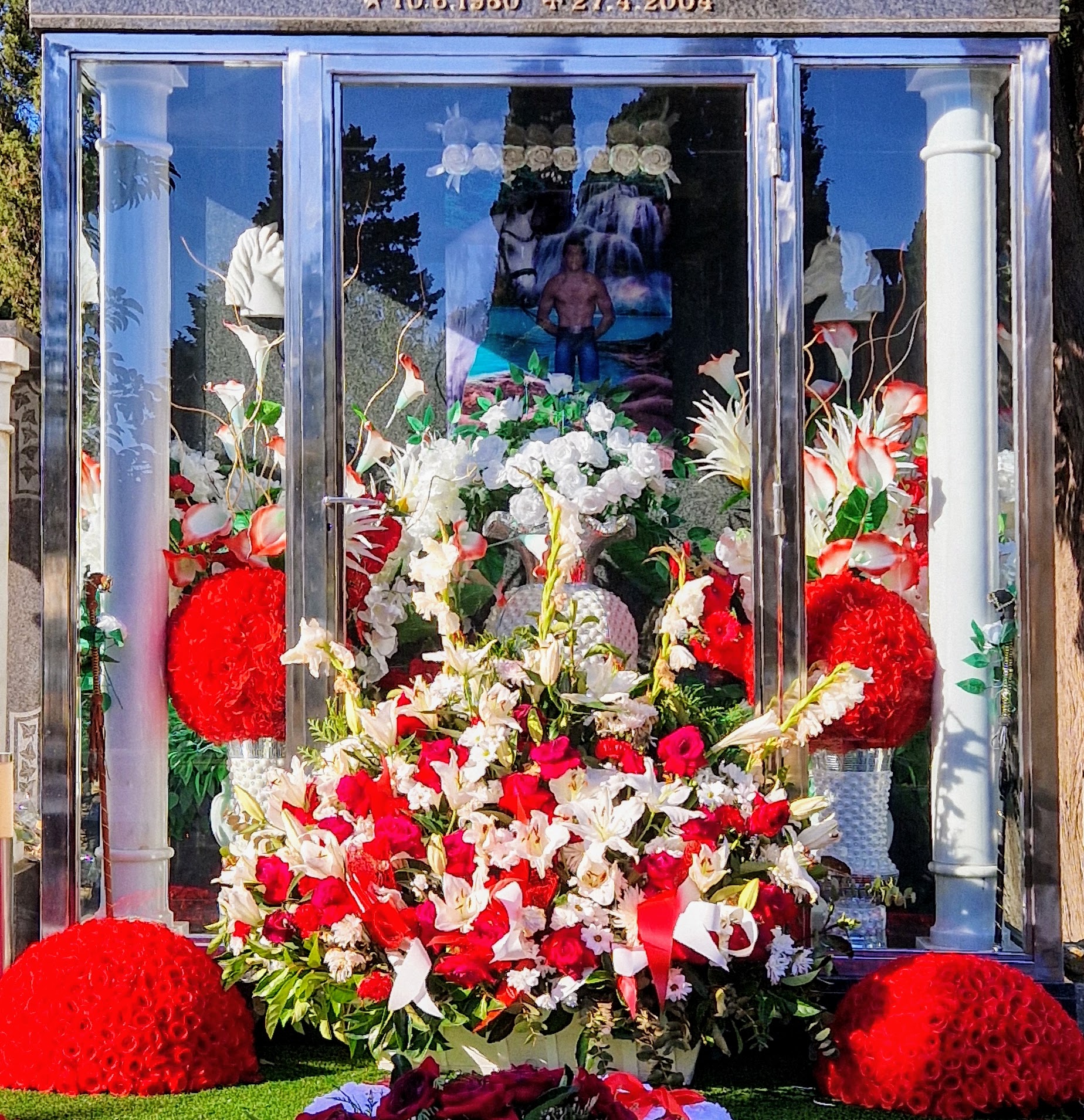
I first visited Montjuïc Cemetery in 2004 guided by a friend, the artist-architect Alexander Pilis. Alex pointed out all sorts of pantheons and family tombs of architectural and cultural interest, including several featuring copious amounts of steel-framed glass on stone socles.
Mies van der Rohe is surely among the most imitated architects of all time, up there with Andrea Palladio. Partly as a result of his role as director of the architecture school at the Illinois Institute of Technology (IIT), his particular architectural style became hugely influential, resulting in many Miesian buildings around the world. The Russell Building at the University of Manitoba School of Architecture, by James Donahue, is clearly a larger version of the Farnsworth House, in this case with a fantastic central courtyard, while the Saidye Bronfman Centre in Montreal, by Phyllis Lambert, pays homage to IIT’s Crown Hall. The ensemble of buildings that comprises the Toronto Dominion Center has grown over time with newer towers in a similar style. And the Barcelona Pavilion itself, as it stands today, is a reproduction of an original that was demolished in 1930
And yet, imitation of another’s work is considered a no-no by many architects and critics, who poo-poo a supposed lack of originality. It is known that the Great Mosque of Cordova –before the Cathedral was inserted into it– was enlarged several times by different architects, yet it is precisely the similarity of these expansions that makes the whole so coherent and powerful. If every architect had wanted to “do their own thing” the result would be a mish-mash mosque. Housing has traditionally imitated certain prototypes in different places, and it is precisely this resultant repetitiveness that lends cities their identities. Repetiton and imitation are intrinsic components of built environments the world over.
So, there is really nothing wrong with imitation per se. It is what is being imitated (and to what end) that matters. The Crematorium of Barcelona may not be a work of “greatness,” but it pays homage to one, and that’s already a step up.
 Criticalista