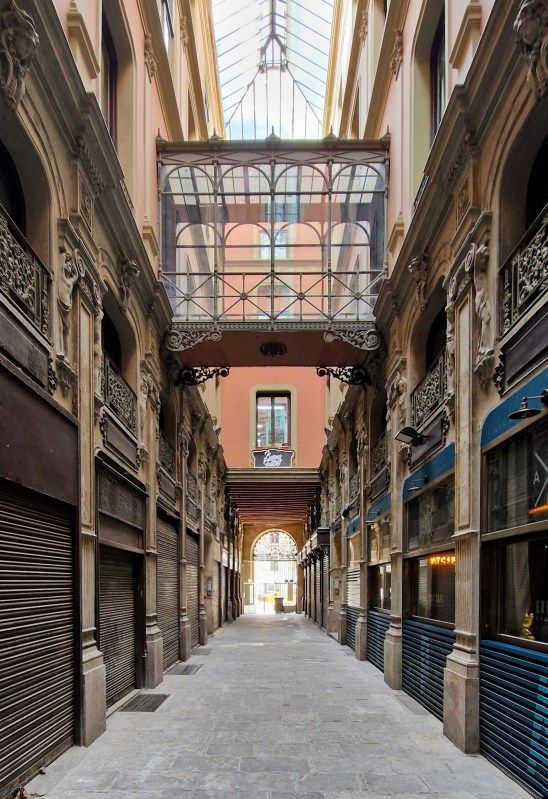
On the occasion of the upcoming UIA (Union Internationale des Architectes) World Congress in Barcelona, I have decided to post some tours of architectural interest. This first one focusses upon Barcelona’s many passatges (arcades or passageways), those mysterious pedestrian paths that lead into the middle of densely built-up city blocks. Most of Barcelona’s passageways date from the industrial revolution, when the city grew rapidly. In many cases they provided access to factories occupying the courtyards of city blocks, but in other cases they served housing or small retail spaces. Europe’s passageways are in fact the precursor to the modern shopping mall, as epitomized by Toronto’s Eaton Centre (1977 by Zeidler with Bregman + Hamann).
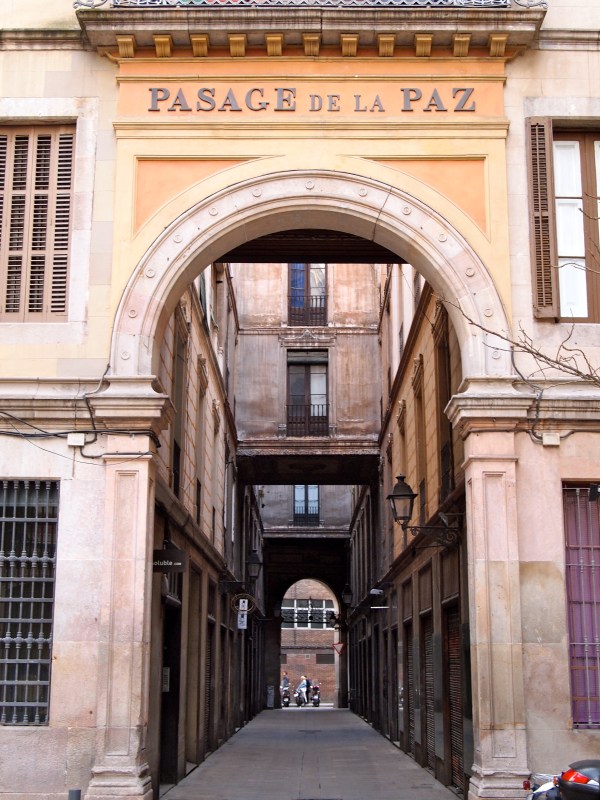
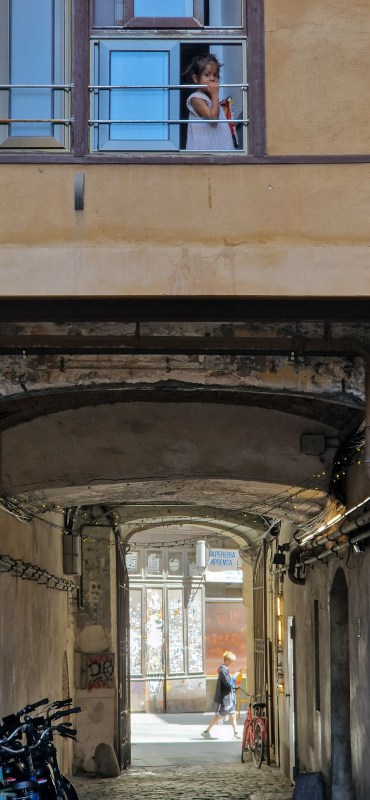
Louis Aragon and Walter Benjamin were great admirers of the passageways of Paris. In that city, most passages are glass-covered arcades containing elegant shops, while some, such as the Passage du Caire, served industry. In Barcelona, on the other hand, very few passatges are glass-covered, owing to climatic difference. Rather, most are covered where they begin by penetrating a building, and then open inside. But there are also some, such as Passatge de les Manufactures, that are effectively “tunnels” receiving very little daylight.
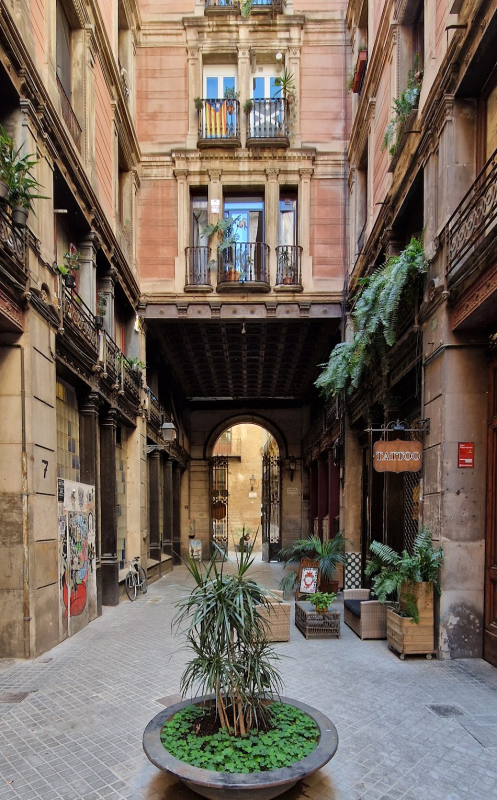
The beauty of urban passageways is their secretive and hidden-away quality, making them fun to discover. Easy to miss, once entered they often reveal another world, one which can occasionally take surreal and surprising turns. You never quite know what to expect, which is a quality that is too often amiss in the modern and predictable city.
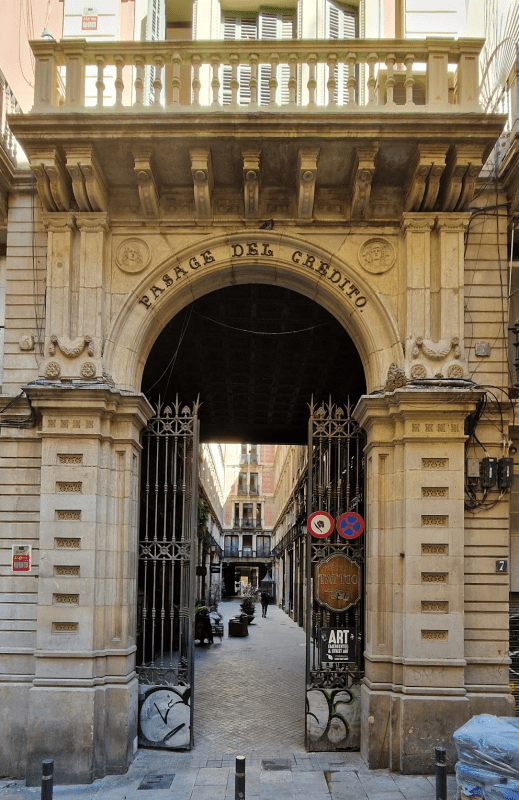
Passatge Bacardí, a glass-covered passageway between Plaça Reial and La Rambla completed in 1865 by architect Francesc Daniel Molina, is undoubtedly one of the most exquisite designs; as is Passatge del Crèdit, a semi-open passageway completed by architect Magí Rius i Mulet in 1879 that is also famous for being the birthplace of artist Joan Miró. Both are cast-iron beauties. An important industrial passageway in Barcelona is Casa Antoni Tarrés (C. Tallers 45), a ceramist whose factory producing terracotta architectural elements was once situated behind his house. The passageway enabled deliveries to and from his landlocked factory.
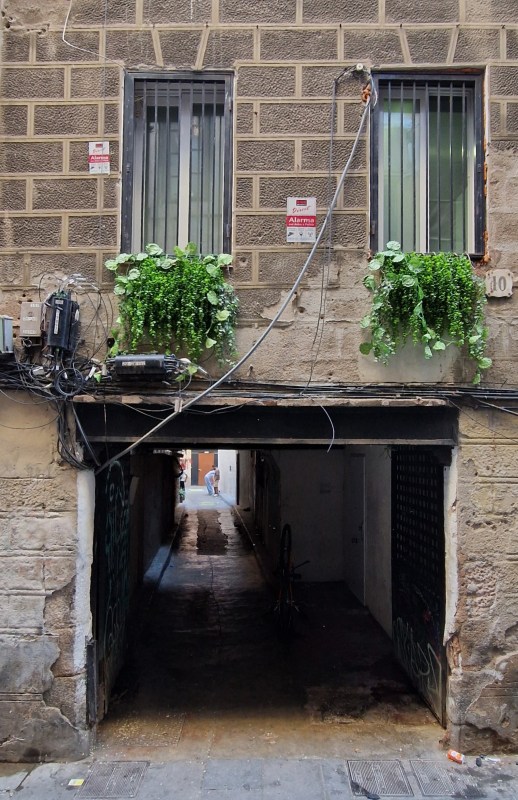
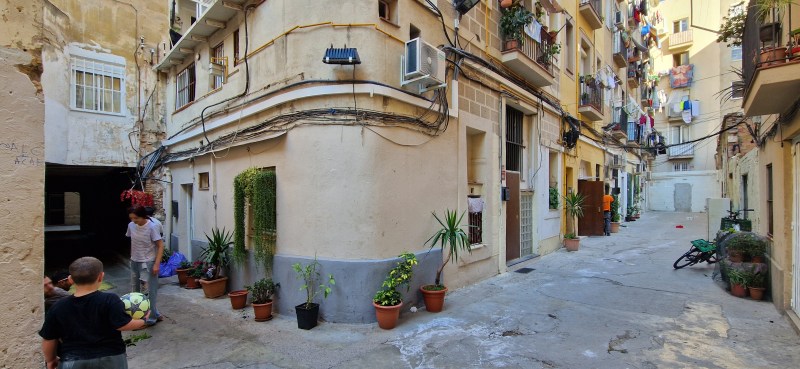
There are also some Barcelona passageways that don’t appear to be very inviting from the outside, but inside they are full of life. Carrer de Santcliment 10, in El Raval, is an “L” shaped, dead-end passageway that provides access to housing as well as an industrial workshop that burned in 2021 without the ruin ever being cleaned up. It’s in an immigrant neighborhood, and it’s off the tourist circuit, so Barcelona City Council is seemingly in no rush to do anything about it. But residents nevertheless keep the passageway clean and cultivate plants in it, revealing that these can be spaces of community and neighborliness.


2 Comments