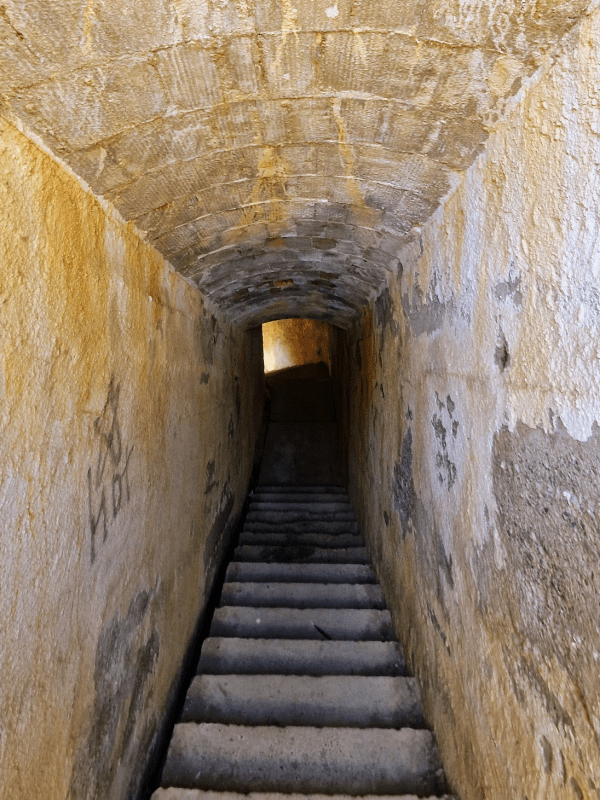
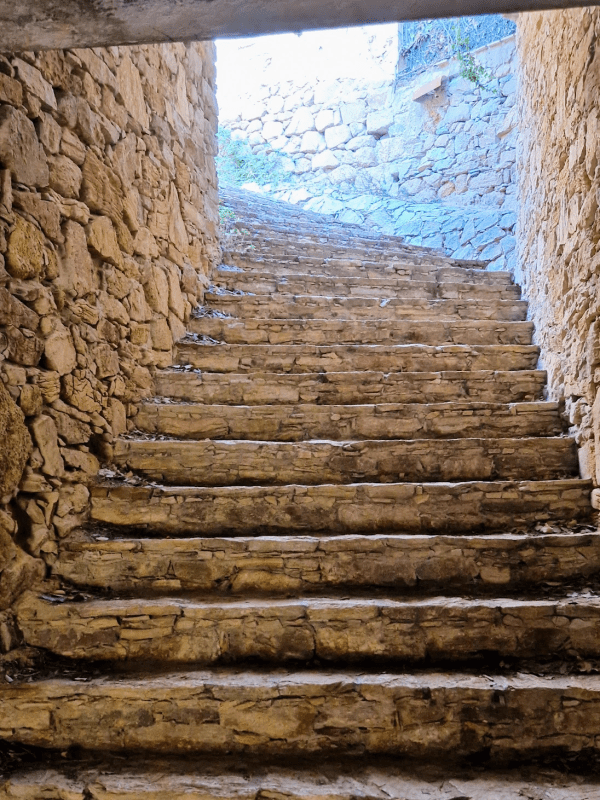
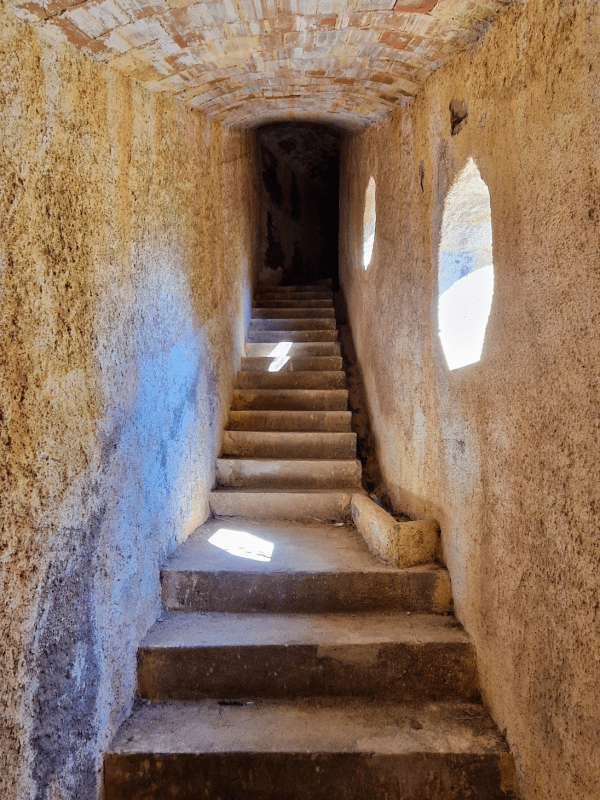
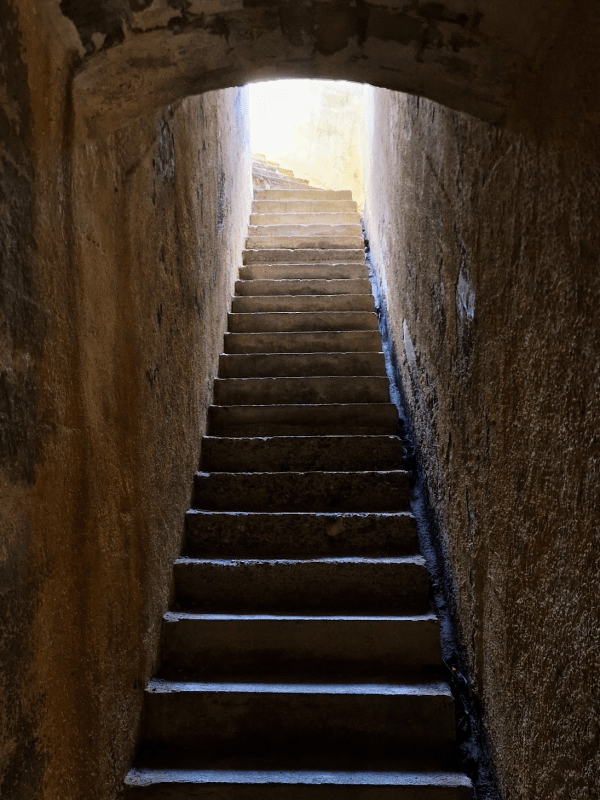
Footpaths are some of the oldest and most commonly found infrastructure works on our planet. Yet they can also be highly architectural, especially when adapted to challenging terrain or conditions. On mountains, for example, where footpaths are often the only available ground transportation routes, these might be paved with “locally-sourced” stone, and stepped in steep sections to make them more durable, comfortable and safer. The often irregular rise-run ratio of these “stairs” is due to adaptation to natural terrain, as opposed to the other way around. While most footpaths attempt to “step lightly” upon nature, there are also notable exceptions in which the opposite is the case, as discussed below.
Many footpaths are historic, indeed ancient. Originally built for purposes of defense, surveillance, transportation routes, or simply as ways of getting from A to B, many historic footpaths are today numbered and mapped, just like any national road network. More recently constructed footpaths, by contrast, serve mainly for leisurely sightseeing, as is the case in certain nature parks and canyons, where admission is sometimes even charged.
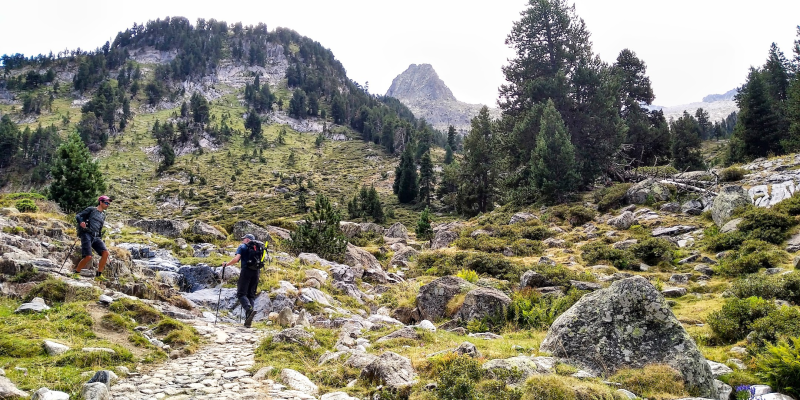
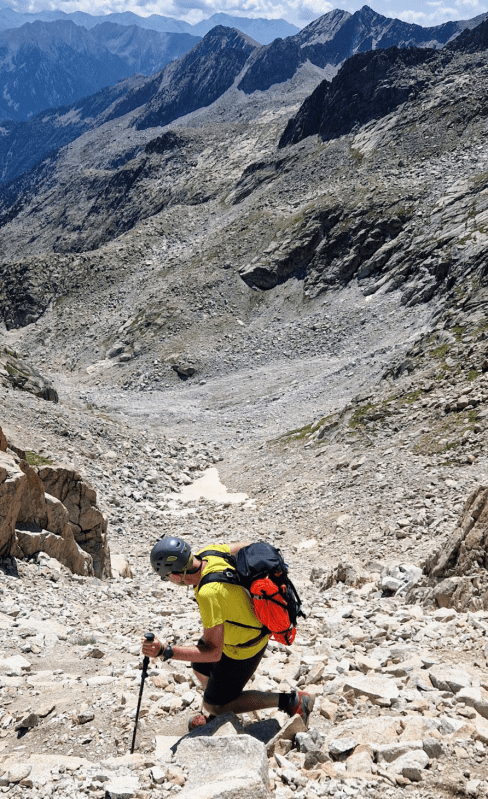
Spain has a vast network of footpaths, enabling long treks to be realized. The GR11 (GR = Gran Recorrido or great path), also known as the Senda Pirenaica, permits, for example the Pyrenees mountain range to be traversed from the Atlantic Ocean to the Mediterranean Sea, an 800km long trek that takes many weeks and climbs a total of almost 40,000m. The trail crosses numerous mountain passes over 2,500m in height, where snow can be found well into July. The GR11 crosses countless rivers and streams, and there are many natural springs where the water bottle can be safely replenished.
By contrast, GR92, a part of which is known as Camí de Ronda, is a historic trail that runs along the entire Mediterranean coast of Catalunya (and of Spain when eventually completed). It is also very rugged, but stays relatively close to seashore in both distance and elevation. Heavily used in summer by beachgoers, the Camí de Ronda was originally built for purposes of surveillance, especially of pirates and smugglers.
Then there is also of course the famous and heavily trodden historic pilgrimage route to Santiago de Compostela, along with many trails that were formerly railway tracks and are now vias verdes, or greenways that can also be cycled easily.
The great thing about hiking in Spain is that a village with a good place to eat, drink and rest is never usually far away. Hostels serving home-cooked meals abound, and are always sociable places where recommendations can be gleaned from keepers or guests.
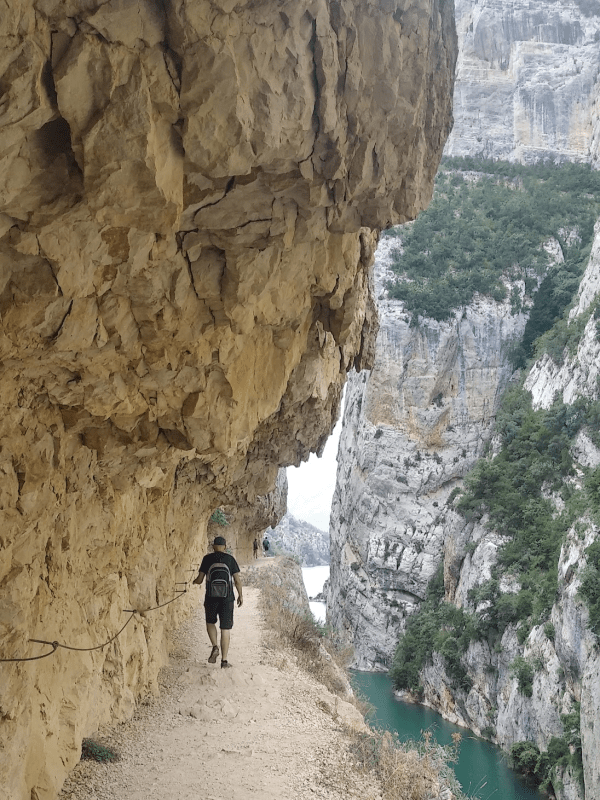
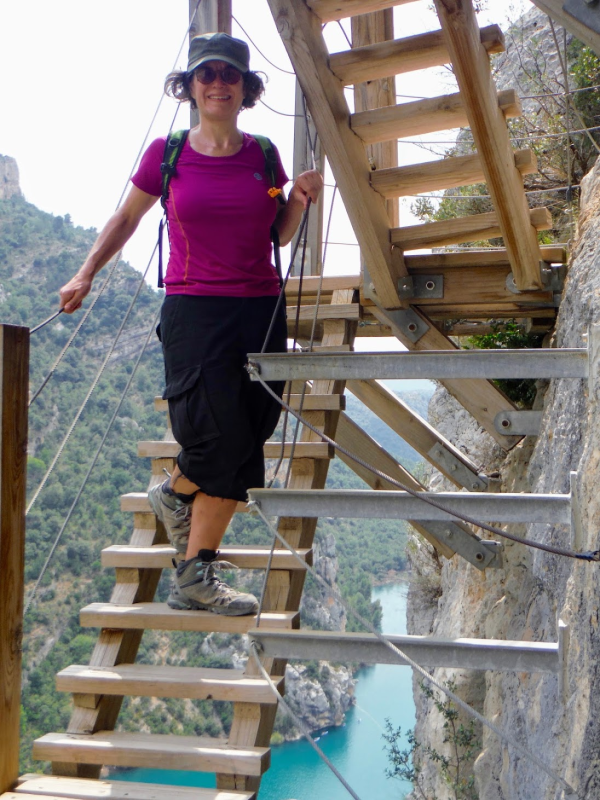
The most architectural of Spain’s footpaths are found on cliffsides, where in older times trails and acequias (irrigation canals) were typically carved out of rockfaces by hand. Newer cliff paths, by contrast, take the form of steel catwalks and stairs suspended from rockfaces. These are literally “cliffhangers.”
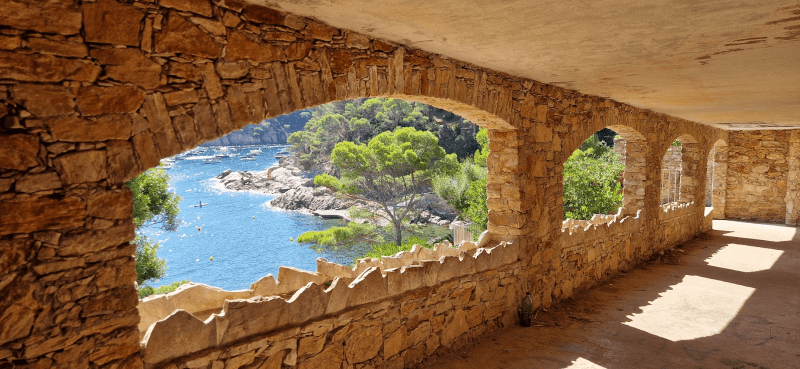
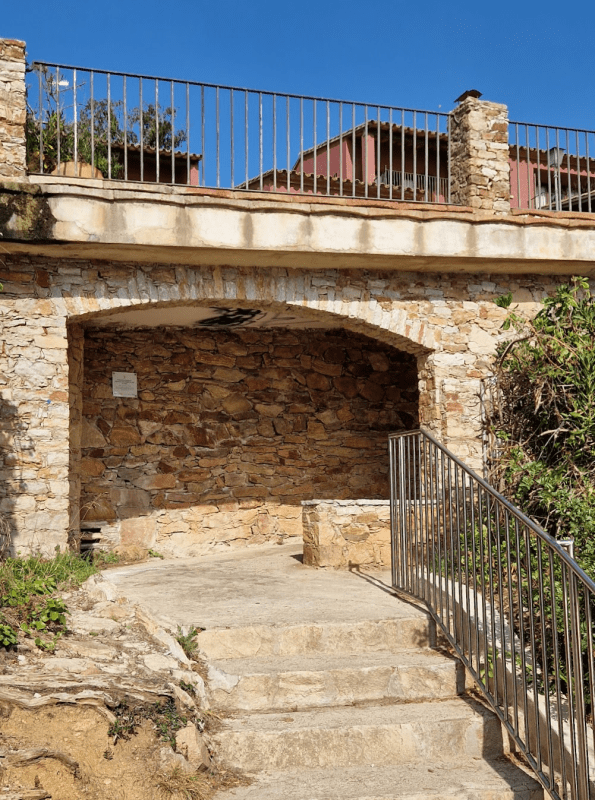
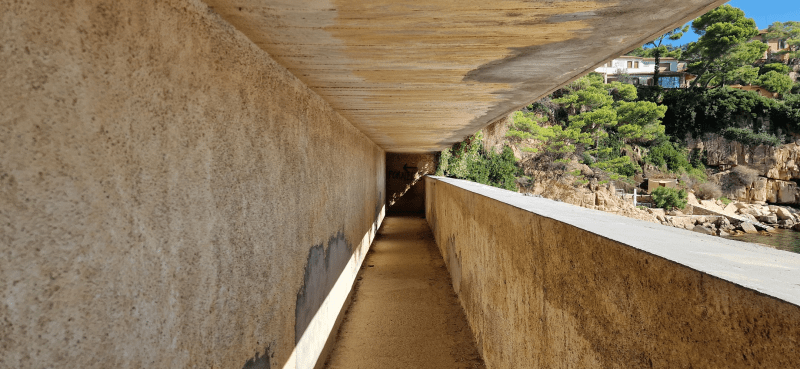
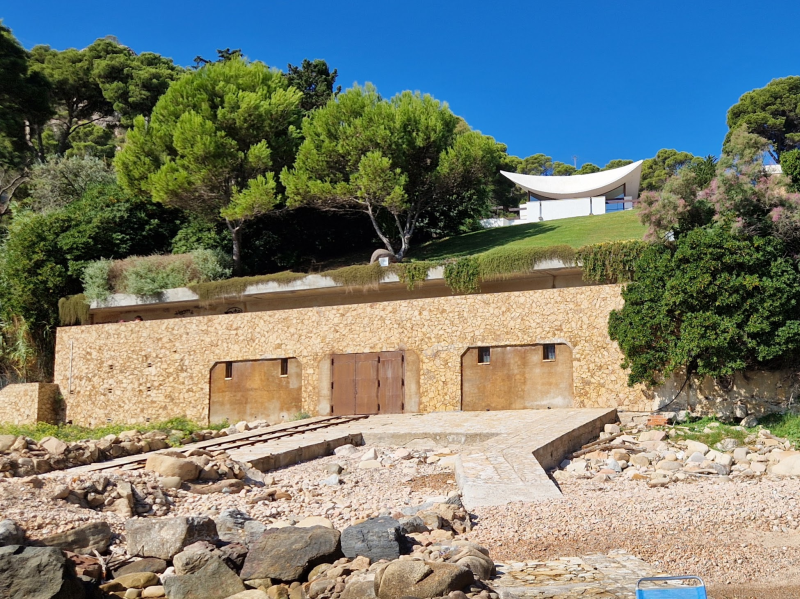
In other places, such as the Camí de Ronda, many stretches of that trail have been semi- or entirely buried underground, involving the costly construction of tunnels. Who built these tunnels, and why? The answer is wealthy owners of sumptuous sea-fronting villas who desire the utmost in privacy and who don’t want the sight of sweaty hikers spoiling their sea view. In Spain, the entire seafront is a right-of-way that cannot be privatized (thankfully!), which is what has given rise to this surreal type of sunken and invisible footpath (that is not unlike a ha-ha wall). The tunnels even reflect, however subtly, the architectural styles of the villas above, even though the villas are difficult to see, of course.
Hiking is truly the best way to get to know the lay of the land. The pace is both slow enough to see details and to strike up conversation, yet also fast enough to cover distances. Walking is the transportation mode that permits the most kinds of terrains to be traversed, depending on one’s capability and experience, of course. Walking is the simplest and most basic mode of human movement, one that allows ideas to be pondered and reflections and observations to be made, all while keeping our bodies healthy. Hiking is in fact therapeutic: it is an antidote to stress that recharges the batteries and reconnects us with both nature and humanity.