Congratulations on all your efforts to have Barcelona declared the UNESCO / UIA World Capital of Architecture in 2026. As I’m sure you are aware, the architecture of Barcelona is more than merely a collection of great buildings. It is also the city’s public spaces, the design of its streets and infrastructure systems, and not least its ordinary building stock, without which the great buildings wouldn’t stand out. Barcelona’s architecture also has much to do with the use that is made of it and the cultures that inhabit it, which vary greatly among neighborhoods. Without inhabitation, maintenance, and care, there is no architecture.
This is why I am writing you this open letter. My neighborhood of El Raval is not receiving an adequate amount of care and maintenance. It is one of the economically less fortunate neighborhoods of Barcelona, as the HBO Max series Ravalear makes evident, and it is probably the most densely populated square kilometer in Europe if reality is taken into consideration as opposed to official statistics. It is an immigrant neighborhood, moreover, in which many inhabitants don’t vote in elections. Is this perhaps why it receives less care and maintenance than other neighborhoods?
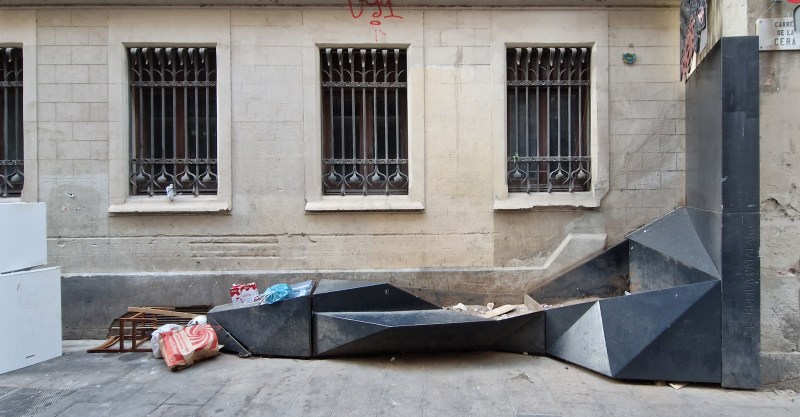
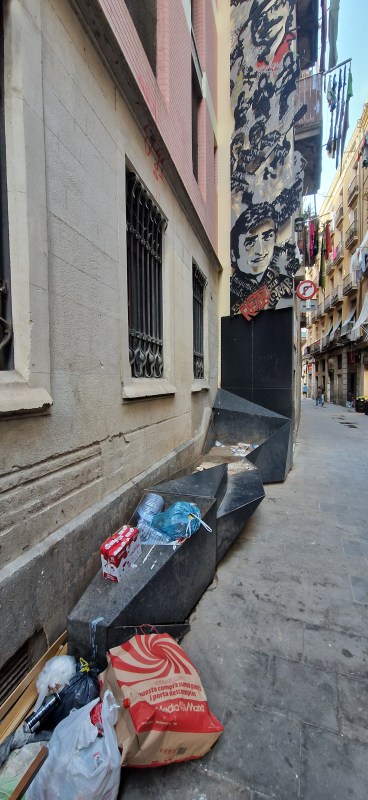
Let me point out some examples of municipal carelessness in El Raval. Several years ago, a pair of public artworks were installed on Carrer de la Cera in recognition of that street’s significance as the birthplace of Rumba Catalana (a musical genre popularized internationally by the group The Gypsy Kings). The artwork pays homage to seminal figures such as Peret, El Pescaílla, and Gato Pérez. Yet the architecturally designed planter that forms the base of this artwork has no plants in it (they died during the drought, but that’s over now!). Instead, the planters fill up with trash, dishonoring these musical pioneers.
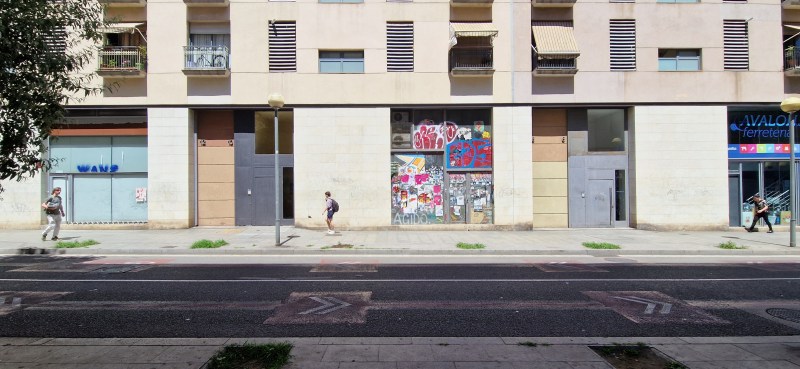
Nearby, on Carrer Maria Aurèlia Capmany, there are a dozen empty tree planters. It is one of the few streets in El Raval that is wide enough to have trees growing in its sidewalks, yet many of them are absent. Why? El Raval has the highest urban heat-island effect in all of Barcelona, making trees here more necessary than anywhere else. I know that there is such a thing as “green gentrification,” but that is not a valid excuse to make some inhabitants suffer more than others through heat waves. Gentrification must be fought by other means (rent control, social housing, prohibiting real-estate speculation, banning tourist apartments, etc.).
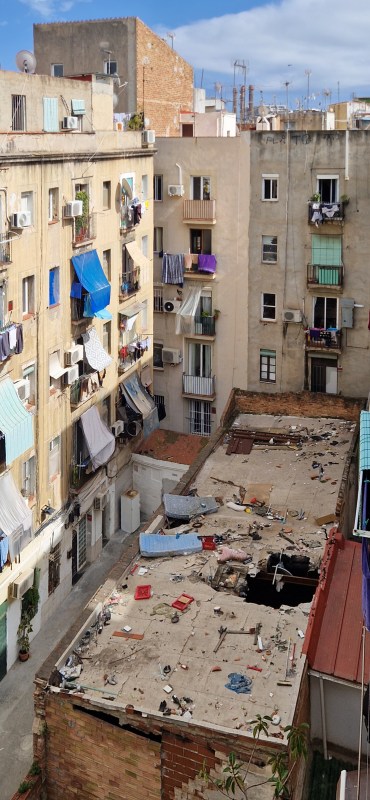
Over on Carrer Santcliment, which terminates at Carrer de la Cera, there’s a passageway that is marred by an abandoned building infested with rats. It burned in 2022, leaving a huge hole in the roof, and it has become an impromptu dumping ground ever since. The owner is evidently absent, so why isn’t Barcelona City Council using emergency public sanitation measures to expropriate this property and demolish the ruin? It would make a great little pocket park for the neighbors of this passageway, who have had to put up with this disaster area for over four years now.
Sorry to rain on your parade, Mayor Collboni, but there is an architectural dark side to this city that is going completely unmentioned. Somebody has to reveal it. I hope you understand.
Finally, I would also like to congratulate you for bringing the start of the Tour de France to Barcelona. As a cyclist, I am thrilled. But at the same time, I am baffled, because as mayor you have built almost no new bike lanes in this city (by comparison, your predecessor, Ada Colau, built 129 km of bike lanes!). Are we to conclude that you like the media spectacle of the Tour de France, but not the actual cycling? If you prefer, I’ll grab my car instead of my bike from now on every time I have to go somewhere, and clog up Barcelona’s streets even more.
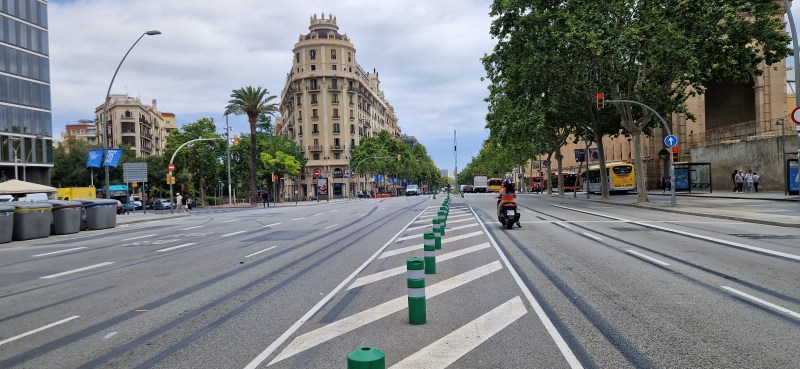
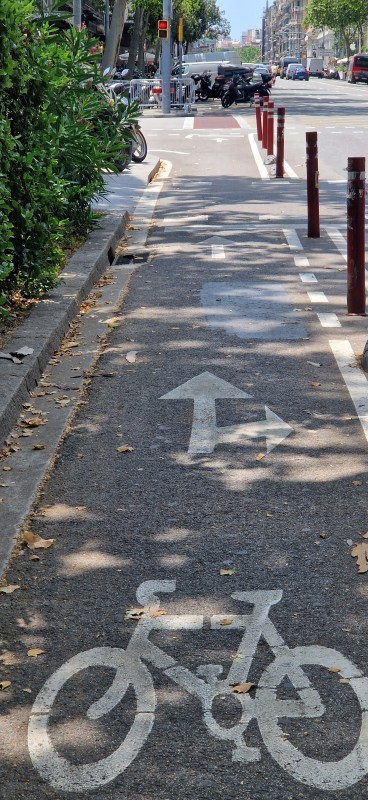
To end on a positive note, I would like to suggest a new global event that Barcelona could initiate: an international prize for the mayor who goes the furthest in curbing tourism, private automobiles, and gentrification and speculation; and that at the same time plants the most trees, lays down the most kilometers of bicycle lanes and public transit, and builds the most affordable housing. Come on, what’s stopping you?


1 Comment